
ISO/IEC 38500:2024 provides global guidance for organizational leaders on the effective, ethical and efficient governance of information technology (IT). The standard helps boards and executives to ensure that IT aligns with business goals, delivers measurable value and supports sustainable development through responsible digital transformation.
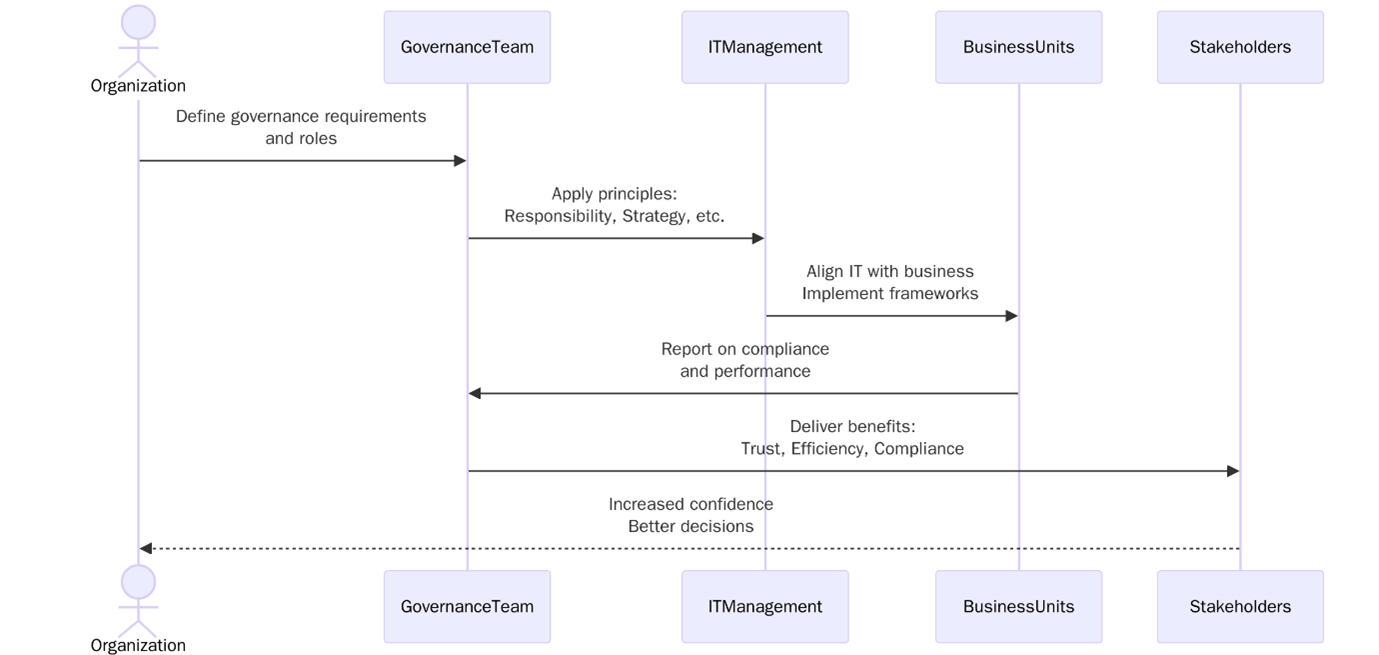
The 2024 revision builds on earlier versions by integrating contemporary challenges such as cloud migration, artificial intelligence governance, remote workforce management, digital ethics, and sustainability. It also recognizes the need for governance to support performance and proactively manage digital risks and opportunities. Organizations adopting this standard are encouraged to embed governance at all levels, from board strategy to project execution. In a world where technology underpins nearly all aspects of operations and marketing advantage, the standard provides a timely foundation for organizations to demonstrate trustworthiness and accountability in how they govern digital systems.
For audit and certification support, contact support@demo.pacificcert.com.
ISO/IEC 38500 is centered around six high-level principles:
These principles serve as a reference point for assessing, directing, and monitoring IT across its lifecycle and within its organizational context. They also encourage leadership to consider IT not as an isolated domain, but as a driver of transformation across financial and social outcomes.
ISO/IEC 38500 is designed for:
It is especially relevant to organizations:
The standard is equally applicable to startups and SMEs that wish to embed strong governance principles early in their growth to prepare for scaling, investment, or regulatory oversight.
Clause No. | Clause Title | Description |
1 | Scope | Defines the scope of the standard, applicable to the governance of current and future use of IT. |
2 | Normative References | Lists essential references, including ISO 37000, for organizational governance alignment. |
3 | Terms and Definitions | Provides key definitions for consistent understanding and application across stakeholders. |
4 | Good Governance of IT | Outlines key governance outcomes: effective performance, responsible stewardship, and ethical behavior. |
5 | Principles for the Governance of IT | Lists 12 guiding principles including value generation, accountability, risk governance, and stakeholder focus. |
6 | Model for the Governance of IT | Describes the core governance tasks: Evaluate, Direct, Monitor IT activities and decisions. |
7 | Framework for the Governance of IT | Provides a structured approach for implementing governance principles and aligning IT with organizational goals. |
Get expert assistance for ISO/IEC 38500 certification process at support@demo.pacificcert.com.
Organizations can incorporate ISO/IEC 38500 and its governance framework into internal assessments and certifications like ISO 9001, ISO/IEC 27001, and ISO/IEC 20000-1. Process involves:
Organizations may choose to publish conformance declarations or include ISO/IEC 38500 alignment in their sustainability or annual governance disclosures.
To begin structured governance implementation, contact support@demo.pacificcert.com.
To demonstrate adherence to ISO/IEC 38500 principles, organizations should maintain:
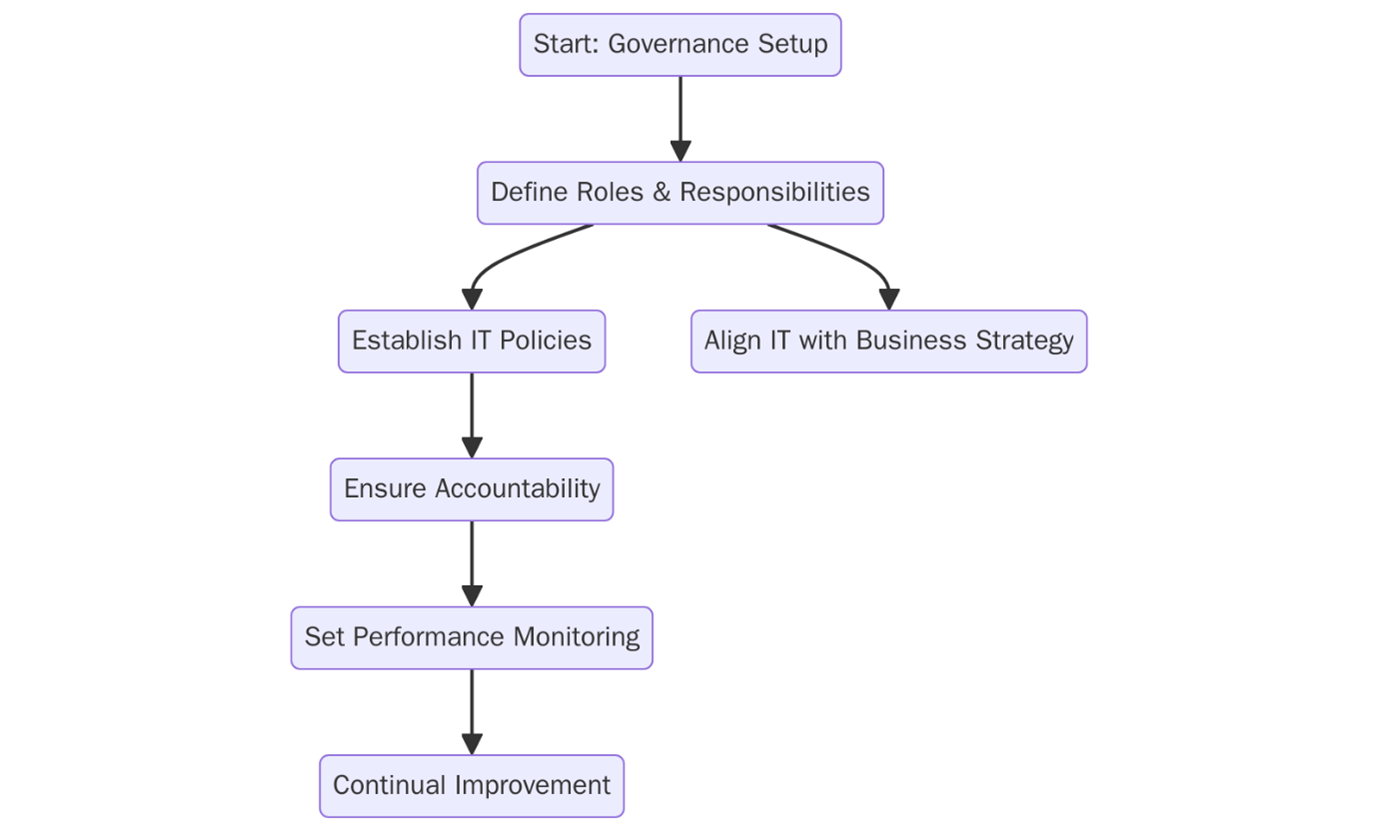
These documents also serve as evidence for board reviews, investor due diligence, or external audits under other regulatory or standards-based frameworks.
Need certification and documentation support? Email support@demo.pacificcert.com.
Implementation timelines vary depending on maturity, existing frameworks, and resource availability. A typical roadmap might include:
For larger or decentralized organizations, this timeline may extend up to 16 weeks to account for stakeholder coordination, regional IT variances, or alignment with global standards. Estimated total duration: 8–12 weeks.
ISO/IEC 38500:2015 process cost varies depending on the organization’s size, IT governance complexity, number of operational locations, and whether the assessment is conducted as a standalone conformance audit or integrated with certifiable standards like ISO/IEC 27001 or ISO 20000. Costs are also influenced by the level of documentation readiness and the duration of the audit process.
With digital transformation accelerating, organizations are under increasing scrutiny to demonstrate accountability and governance over technology decisions. The ISO/IEC 38500 framework helps ensure board-level oversight on cybersecurity, sustainability, data privacy, digital ethics, and technology risk.
Its relevance is growing across sectors like finance, healthcare, government, education, utilities, and supply chain services. It complements governance models like COBIT, NIST, and ESG-aligned digital leadership initiatives. The increasing adoption of AI, IoT, and blockchain systems underscores the need for effective IT governance frameworks like ISO/IEC 38500 to ensure that innovation does not outpace ethical and operational oversight.
If you are looking for ISO/IEC 38500 alignment or audit certification, contact us at support@demo.pacificcert.com!
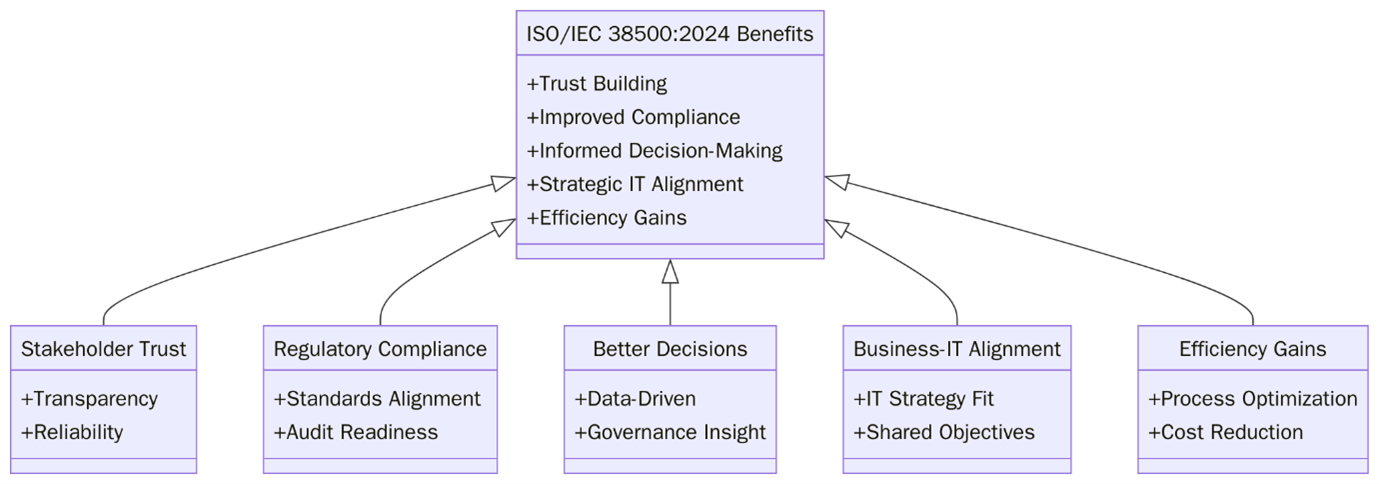
In conclusion, as digital systems become more embedded in organizational success and global expectations for responsible technology use increase, ISO/IEC 38500:2024 equips leadership with a structured yet flexible model to govern IT effectively and sustainably. It supports decision-makers in understanding the implications of technology choices while enabling high performance, compliance, and digital trust.
By integrating this standard into enterprise governance structures, organizations can proactively manage digital risks, maximize value delivery, and demonstrate responsible leadership in an evolving technology landscape.
Whether applied as a standalone governance framework or integrated with other ISO and sectoral standards, ISO/IEC 38500 provides a blueprint for resilient and future-ready digital governance.
To assess your governance readiness or integrate ISO/IEC 38500 into your IT strategy, contact support@demo.pacificcert.com.
Contact Pacific Certifications to begin your certification journey today!
Suggested Certifications –
Read more: Pacific Blogs

Get a rough Estimate for your Required Certification by entering your basic details.
This will close in 0 seconds
Get in touch!
This will close in 0 seconds