
ISO 22000:2018 is an internationally recognized standard for a Food Safety Management System (FSMS). It provides a framework for organizations involved in the food chain to identify and control food safety hazards, ensuring that food is safe for human consumption. The standard combines with key elements of ISO 9001 and HACCP to create a process-based approach to food safety that emphasizes risk prevention, compliance, and traceability.
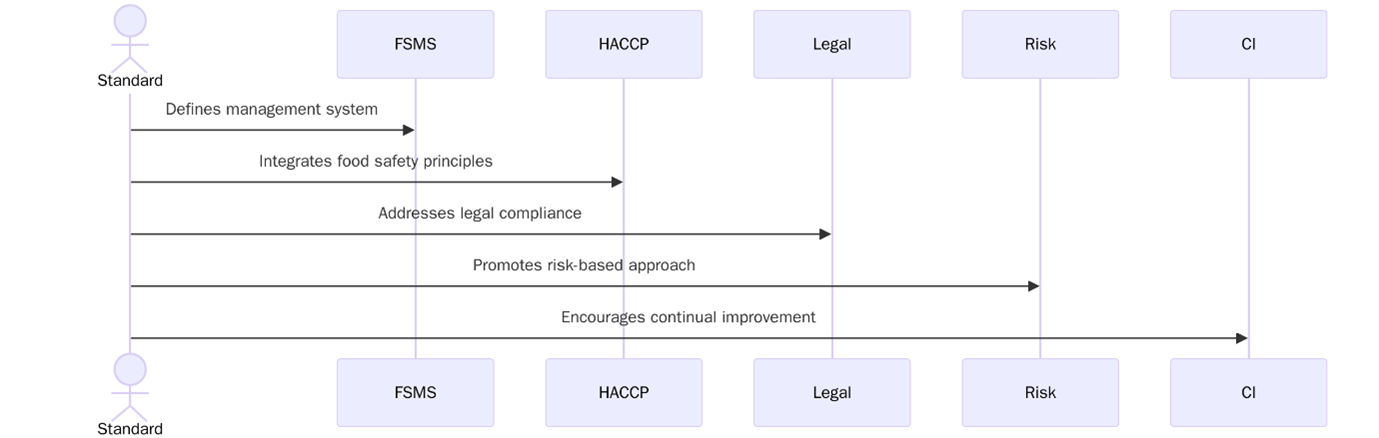
The scope of ISO 22000 is broad, making it applicable to all organizations directly or indirectly involved in the food supply chain, regardless of size, complexity, or geographic location. This includes everyone from food manufacturers to cleaning service providers.
Essentially, if an organization affects food safety at any point, whether through handling raw materials, it falls within the scope of ISO 22000. The standard is designed to be flexible and scalable, enabling all small and big companies to implement a structured food safety system.
“Safe food, trusted systems, ISO 22000 protects every plate”- Pacific Certifications
For ISO 22000:2018 certification support and audit inquiries, contact support@demo.pacificcert.com.
The PDCA Cycle is a foundational concept in ISO 22000 which supports continuous improvement. It helps organizations to systematically plan, implement, monitor, and increase their food safety controls.
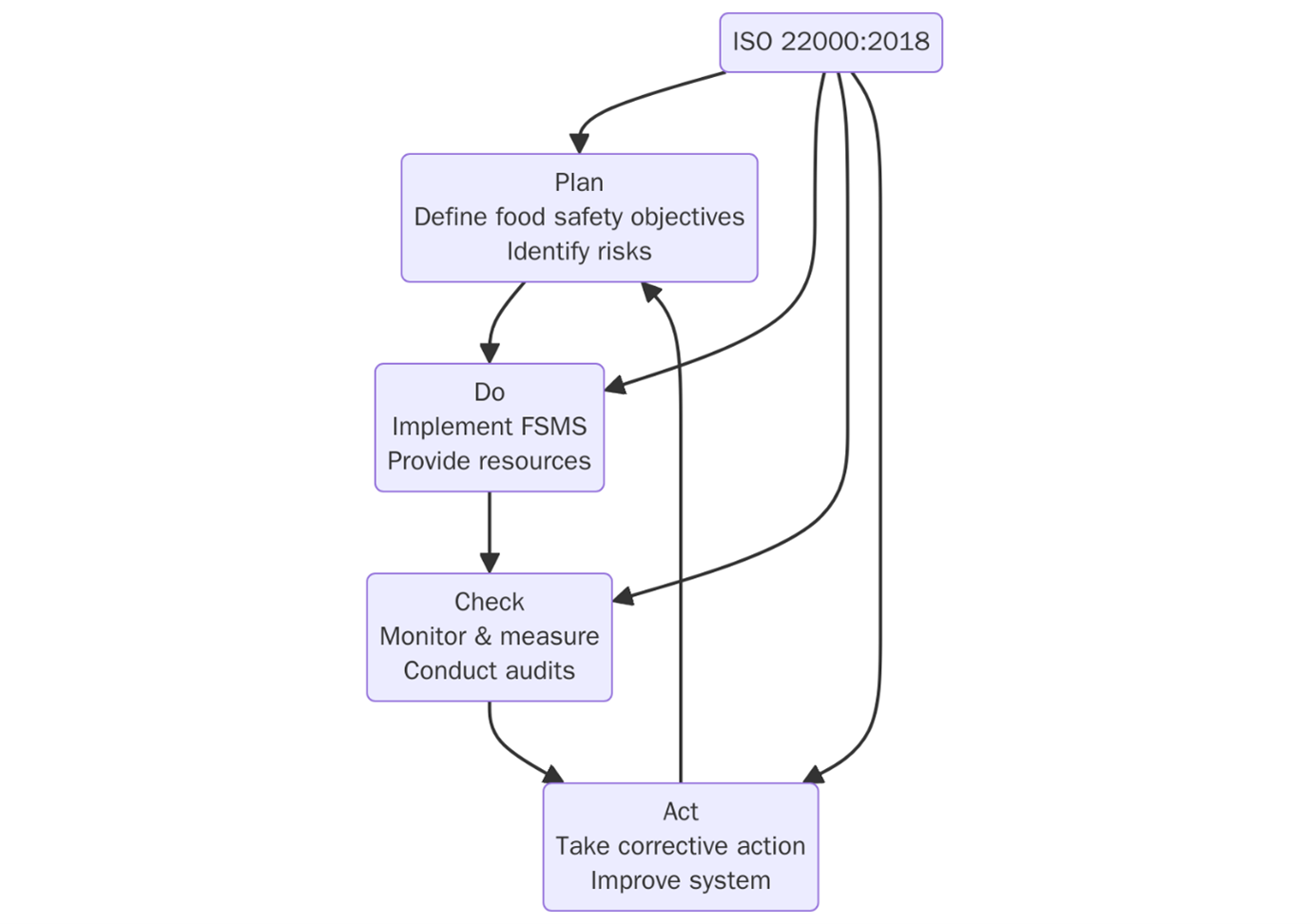
FSMS PDCA model operates on two levels:
Plan: Define food safety objectives, assess risks, identify hazards, and establish control measures including PRPs, OPRPs, and CCPs.
Do: Implement the FSMS as planned.
Check: Monitor and measure the effectiveness of the FSMS, including verification of PRPs and CCPs.
Act: Take corrective actions based on findings
PDCA creates a culture of continual improvement across all levels of the food chain. Need help with ISO FSMS certification? Contact support@demo.pacificcert.com today!
ISO 22000 is built upon a set of core principles that guide organizations in establishing an effective Food Safety Management System:
ISO 22000:2018 follows the Annex SL High-Level Structure, which aligns it with other standards like ISO 9001 and ISO 14001, making integration easier. Below is the table with FSMS clauses:
Clause | Title | Description |
1 | Scope | Defines the applicability and purpose of the FSMS. |
2 | Normative References | Lists referenced documents essential for applying the standard. |
3 | Terms and Definitions | Explains specific terminology used in the context of ISO 22000. |
4 | Context of the Organization | Requires understanding internal/external factors, stakeholder needs, and FSMS scope. |
5 | Leadership | Emphasizes top management’s role in commitment, policy, and assigning roles. |
6 | Planning | Addresses risk-based thinking, FSMS objectives, and planning changes. |
7 | Support | Covers resources, competence, awareness, communication, and documentation. |
8 | Operation | Focuses on PRPs, hazard control plans, traceability, and emergency preparedness. |
9 | Performance Evaluation | Requires monitoring, internal audits, and management reviews of FSMS. |
10 | Improvement | Outlines handling nonconformities and driving continual improvement. |
This structure ensures that ISO 22000 is a process-driven and risk-focused standard for managing food safety across the entire supply chain.
The goal of ISO 22000 is to ensure food safety at every stage of the supply chain. Below is a roadmap to help you implement FSMS in your organization:
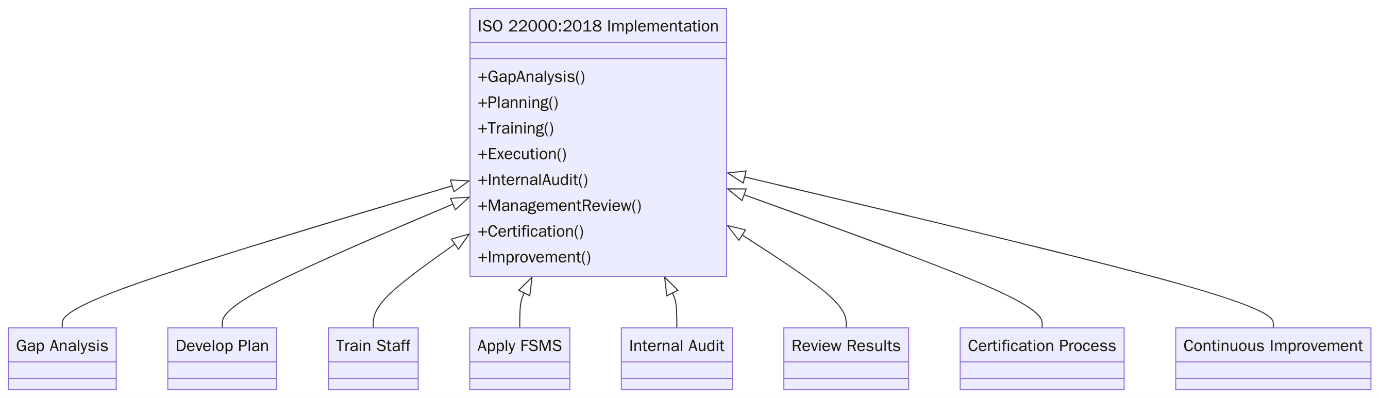
Tip: Start with hazard analysis and train your team, consistency is key in ISO 22000 implementation.
ISO 22000 audit checklist helps to ensure that all food safety requirements are being effectively implemented and maintained:
Tip: “Verify your HACCP plan regularly, it’s the backbone of food safety.”
The ISO 22000 certification process ensures a food business establishes a Food Safety Management System, following:
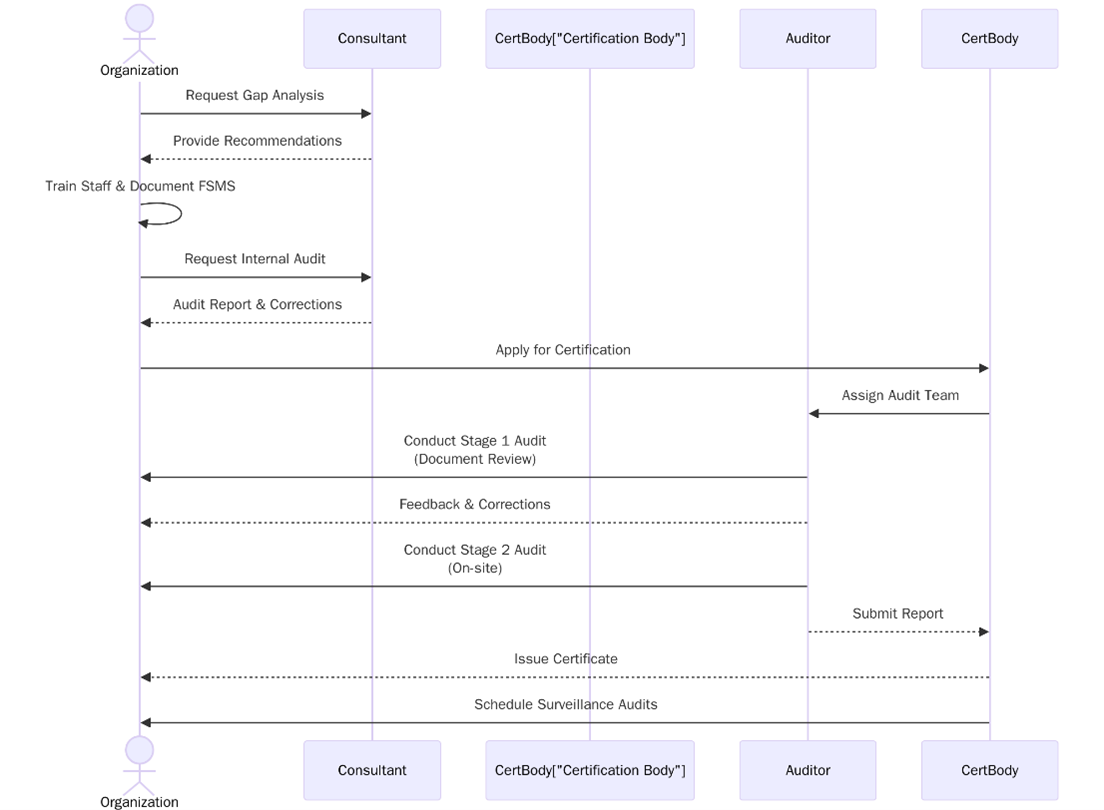
“Begin with a gap analysis, involve cross-functional teams, and treat documentation as your strongest asset.”
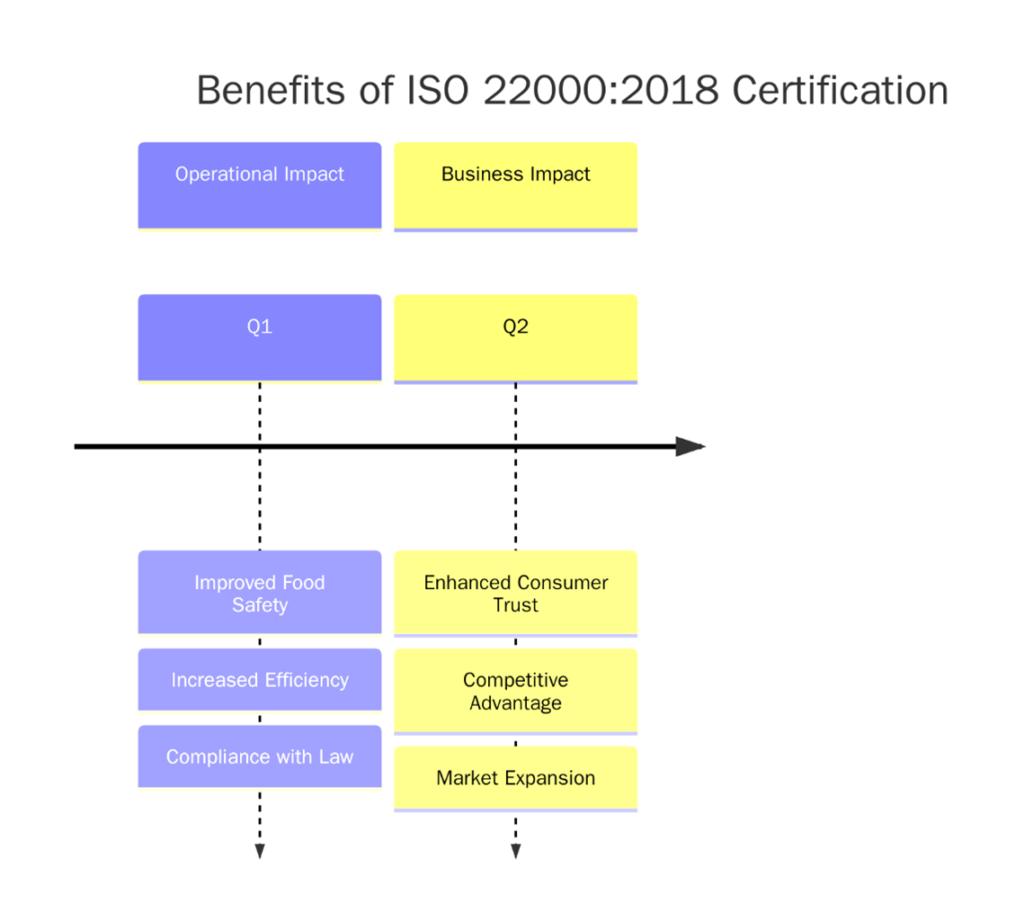
ISO 22000:2018 certification helps to ensure safe food production and customer confidence. Below are the key benefits:
This timeline depends on your FSMS implemented and readiness for the audit, below is the week wise table:
Week | Stage | Activity Description |
Week 1 | Application & Scope Review | Submit FSMS details; certification body reviews scope and prepares audit plan. |
Week 2 | Quotation & Agreement | Receive and confirm quotation; finalize certification contract. |
Week 3 | Audit Planning | Schedule Stage 1 and Stage 2 audits; plan resources and logistics. |
Week 4 | Stage 1 Audit | Documentation review: check policies, hazard analysis, PRPs, and legal compliance. |
Week 5–6 | Address Stage 1 Findings | Close gaps or nonconformities before the Stage 2 audit. |
Week 7 | Stage 2 Audit | On-site evaluation of FSMS implementation, traceability, CCP/OPRP controls, staff roles. |
Week 8 | Audit Report & Corrective Actions | Review audit findings; submit evidence for any nonconformities found. |
Week 9 | Certification Decision | Final review and decision by the certification body based on audit outcomes. |
Week 10 | Certificate Issuance | ISO 22000:2018 certificate issued |
The cost of ISO 22000 depends on the size of the organization, number of employees, number of sites, complexity of food processes, and risk level of operations. Organizations that already have a partially implemented food safety system may see reduced costs due to overlapping controls.
Contact us at support@demo.pacificcert.com to get a personalized quote for the certification process!
ISO 22000:2018 is critically important as it provides a framework for managing food safety risks across the entire supply chain. It helps organizations to meet legal obligations and protect public health. It integrates with HACCP, enabling businesses to ensure consistent production of safe food.
Since food safety failures can lead to severe health consequences, ISO 22000 offers a reliable method to mitigate these risks. It also supports better traceability and internal communication, which are all vital to modern food safety operations. According to recent global data, over 40,000 organizations worldwide have adopted ISO 22000 to strengthen their food safety.
Any business that impacts food safety can benefit from implementing ISO 22000.
“In a global food economy, safety is not an option, it’s a necessity.”
We at Pacific Cert specialize in conducting independent audits to verify whether your FSMS meets all the requirements of the standard. Our audit approach is systematic and ensures regulatory compliance.
Our Services:
Pacific Certifications offers a transparent certification path that builds trust with regulators and consumers. Contact our audit team at support@demo.pacificcert.com.
Contact Pacific Certifications to begin your certification journey today!
Suggested Certifications –
Read more: Pacific Blogs

Get a rough Estimate for your Required Certification by entering your basic details.
This will close in 0 seconds
Get in touch!
This will close in 0 seconds