
ISO 14641:2018 provides an internationally recognized framework for the long-term preservation, authenticity and integrity of electronic documents. It ensures that electronic information remains readable and legally admissible over time, despite technological changes.

This standard is critical for organizations managing large volumes of digital information, particularly in government, finance, healthcare, IT sectors, where traceability and digital continuity are essential.
The primary goal of ISO 14641:2018 is to define specifications for an electronic information system (EIS) that ensures electronic documents:
This standard ensures that preserved digital content meets legal evidentiary value, particularly in audits, court cases, and regulatory inspections.
Looking for ISO 14641 certification? Connect with us at support@demo.pacificcert.com today!
ISO 14641 is applicable to any organization seeking to design and operate an Electronic Document Management System (EDMS) or Electronic Archiving System (EAS) that:
Applicable sectors include:
The standard applies to both internally developed and outsourced digital preservation systems.
Clause | Title | Description |
1 | Scope | Defines the overall objectives and application areas of the standard. |
2 | Normative References | Lists external documents referenced in the standard. |
3 | Terms and Definitions | Provides essential terminology for interpretation. |
4 | General Principles | Outlines guiding principles such as integrity, authenticity, and legal admissibility. |
5 | Functional Specifications | Details requirements for functionality, such as capture, storage, access, and deletion. |
6 | System Architecture and Security | Specifies design principles, access control, encryption, and redundancy. |
7 | Operational Processes | Describes document intake, indexing, versioning, and audit trails. |
8 | Metadata and Classification | Defines how metadata supports preservation and retrieval. |
9 | Monitoring and Audit | Requirements for system logs, traceability, and periodic checks. |
10 | Legal and Organizational Framework | Ensures compliance with legal norms, privacy laws, and internal policies. |
ISO 14641:2018 requires organizations to implement an electronic information system that ensures the traceability, security and long-term accessibility of electronic documents. Below are the key requirements:
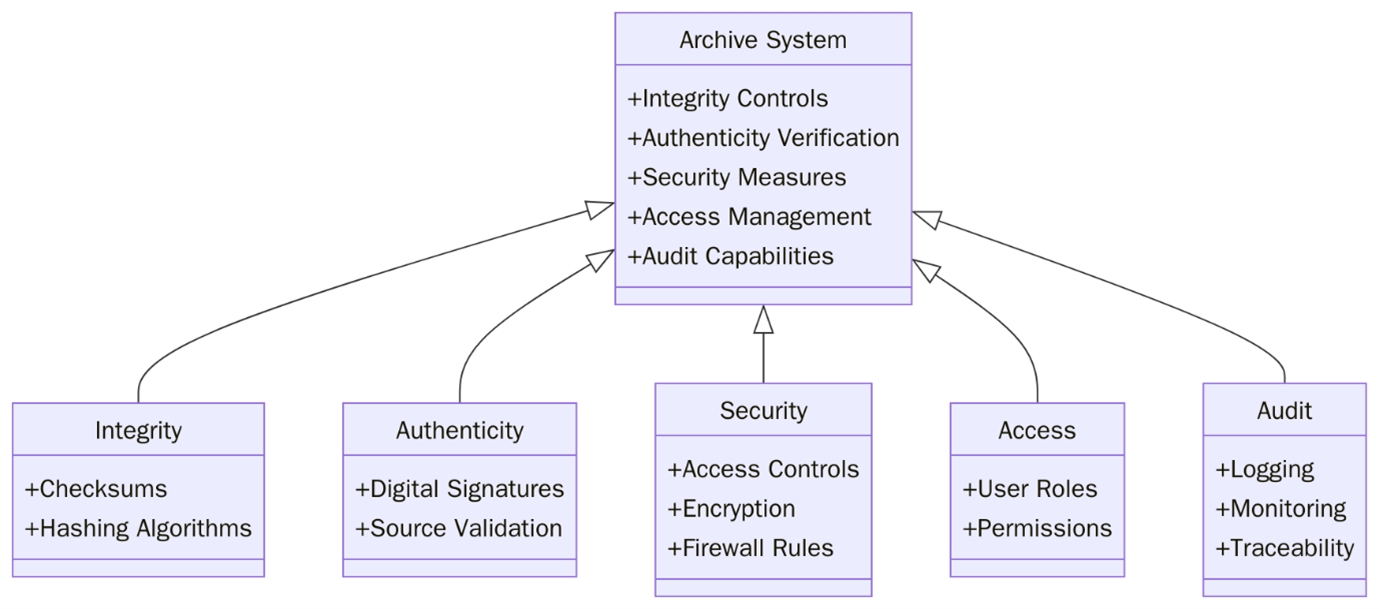
Successfully implementing ISO 14641:2018 requires a combination of technical architecture and user training. Below are essential implementation steps and practical tips:
Tip: Use Open Archival Information Systems (OAIS) principles to ensure interoperability and scalability, and avoid proprietary file formats that may be unsupported in future environments.
Implementing ISO 14641 ensures long-term preservation and integrity of electronic documents. It enhances data security and reduces operational risks associated with digital archiving and record management. Below are the benefits:
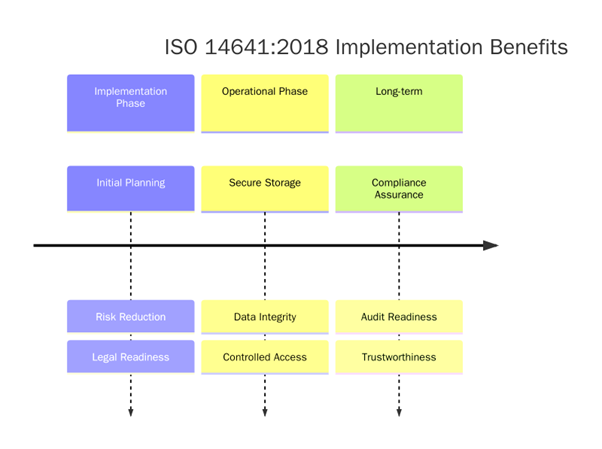
As organizations increasingly transition to paperless ecosystems, the need for robust digital preservation standards like ISO 14641 has grown. With the rise of regulatory scrutiny, remote work, and cybersecurity threats, businesses are investing in compliant EDMS solutions that ensure both data integrity and evidentiary readiness.
The most significant growth is observed in:
Global initiatives on e-governance, digital transformation, and trust frameworks (eIDAS in the EU) are directly aligned with ISO 14641, pushing governments and enterprises to adopt certified systems for digital document preservation.
The cost of ISO 14641 certification varies depending on several key factors, including the complexity and scale of the electronic document management system (EDMS) in place, the volume and types of documents being preserved, the level of system integration with other compliance frameworks (such as ISO 27001), and whether the organization uses an in-house or cloud-based archiving infrastructure. Organizations with highly regulated environments or multiple operational sites may also incur higher costs due to the scope of audits and verification efforts needed for certification.
For a personalized quote, contact us at support@demo.pacificcert.com!
Phase | Activities Included | Estimated Duration |
1. Initial Assessment | Gap analysis, document review, system evaluation | 1–2 weeks |
2. Planning & Implementation | Policy development, system adjustments, metadata configuration | 3–6 weeks |
3. Internal Review | Internal audit, validation of access controls, integrity testing | 1–2 weeks |
4. Certification Audit | Third-party audit by certification body, evidence verification | 1 week |
5. Report & Follow-up | Audit report issuance, corrective actions (if needed) | 1–2 weeks |
6. Certification Decision | Final review and certificate issuance | 1 week |
Pacific Certifications, an accredited certification body, provides audit and ISO 14641:2018 certification services for organizations seeking to ensure the authenticity and longevity of their digital records.
We support clients in:
To start the certification process, reach out at support@demo.pacificcert.com.
Contact Pacific Certifications to begin your certification journey today!
Suggested Certifications –
Read more: Pacific Blogs
Get a rough Estimate for your Required Certification by entering your basic details.
This will close in 0 seconds
Get in touch!
This will close in 0 seconds