
IEC 31010 is an international standard that provides guidance on the selection and application of risk assessment techniques. Risk assessment is a crucial process for identifying and evaluating risks associated with an organization’s activities, processes, and systems. IEC 31010:2019 helps organizations understand how to apply a variety of risk assessment techniques to make informed decisions and manage risks smoothly. The standard offers detailed instructions on how to select the most appropriate risk assessment methods, whether for the purpose of mitigating, controlling, or accepting certain risks.
This standard is widely applicable across many industries, including manufacturing, construction, healthcare, and energy, where safety and major risks need to be managed proactively.
For more information, contact us at support@demo.pacificcert.com.
The purpose of IEC 31010:2019 is to provide organizations with a systematic approach to assessing and managing risk. The standard aims to improve risk management processes by offering guidance on the selection, use, and application of various risk assessment techniques. These techniques help organizations evaluate the likelihood and impact of potential risks and determine appropriate actions to prevent or control those risks. By following this standard, organizations can better protect assets, people, and the environment while maintaining compliance with industry regulations.

IEC 31010 is applicable to any organization, regardless of its size or industry, that needs to evaluate and manage risk. The standard covers a broad range of sectors, from industrial manufacturing to healthcare and financial services, where risk assessment is essential for making informed decisions. It is useful for organizations looking to establish, improve, or update their risk management practices. The techniques outlined in IEC 31010 are designed to be flexible, enabling organizations to select methods that best fit their specific needs, context, and risk profiles.
Clause Number | Title | Description |
Clause 1 | Scope | Defines the scope of the standard and outlines its intended applications. |
Clause 2 | Normative References | Lists the references to other standards that provide support for risk assessment techniques. |
Clause 3 | Terms and Definitions | Provides definitions for key terms used in the standard to ensure clarity. |
Clause 4 | Risk Assessment Process | Describes the steps involved in conducting a risk assessment, from risk identification to risk evaluation and control. |
Clause 5 | Risk Assessment Techniques | Discusses various techniques for risk assessment, including qualitative, quantitative, and hybrid methods. |
Clause 6 | Application of Risk Assessment | Offers guidance on how to apply selected risk assessment techniques to specific scenarios or risks. |
Clause 7 | Evaluation and Control | Provides methods for evaluating identified risks and determining the appropriate actions for mitigation or control. |
Clause 8 | Communication of Results | Highlights the importance of clear communication regarding risk findings and decisions. |
IEC 31010 provides clear guidelines to ensure smooth risk assessment. Below are the key requirements that organizations need to implement for risk management:
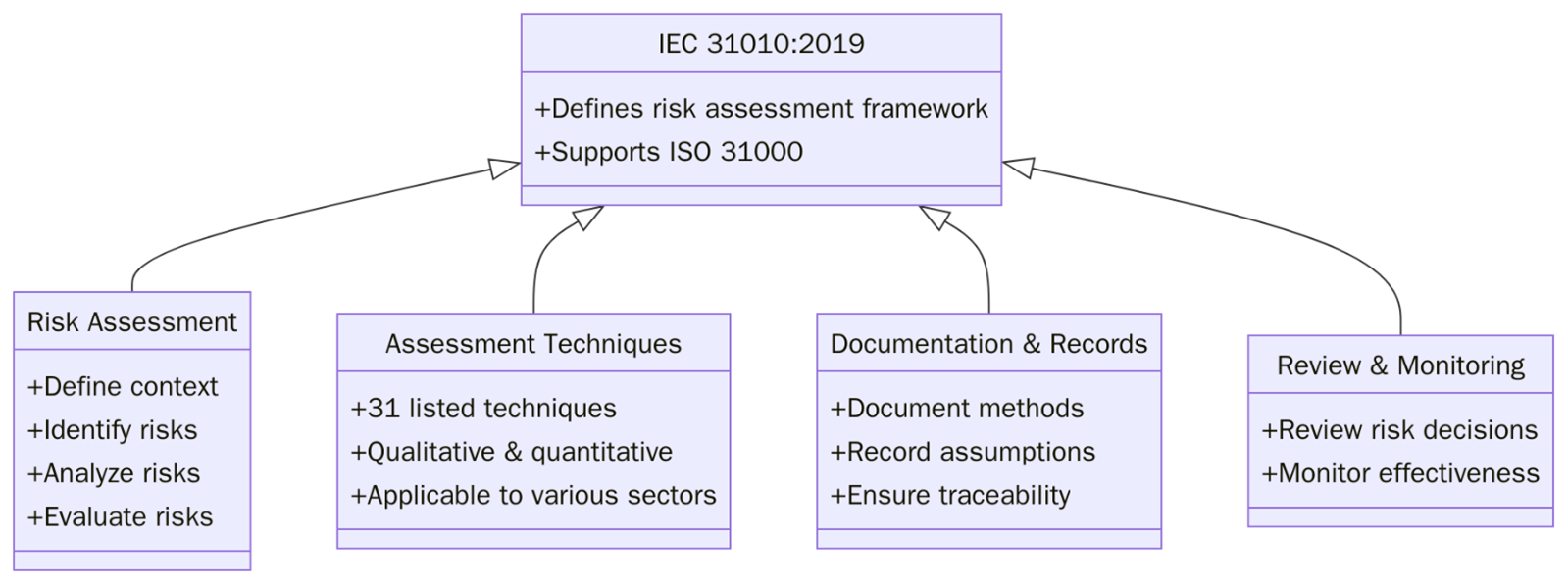
To manage risks smoothly, organizations need a structured approach. IEC 31010 outlines the necessary steps, from risk identification to communication. These steps ensure that risks are accurately assessed, managed, and mitigated to avoid potential negative consequences.
For more information, contact us at support@demo.pacificcert.com
Achieving IEC 31010 certification offers several key benefits for organizations that manage risks smoothly. By adhering to the guidelines in this standard, businesses can mitigate risks and improve their decision-making process.
To ensure that risks are managed and mitigated smoothly, IEC 31010:2019 certification offers several advantages. By following this standard, organizations gain a structured framework for reducing uncertainty, protecting assets, and making more informed decisions. Below are the benefits of obtaining IEC 31010 certification:
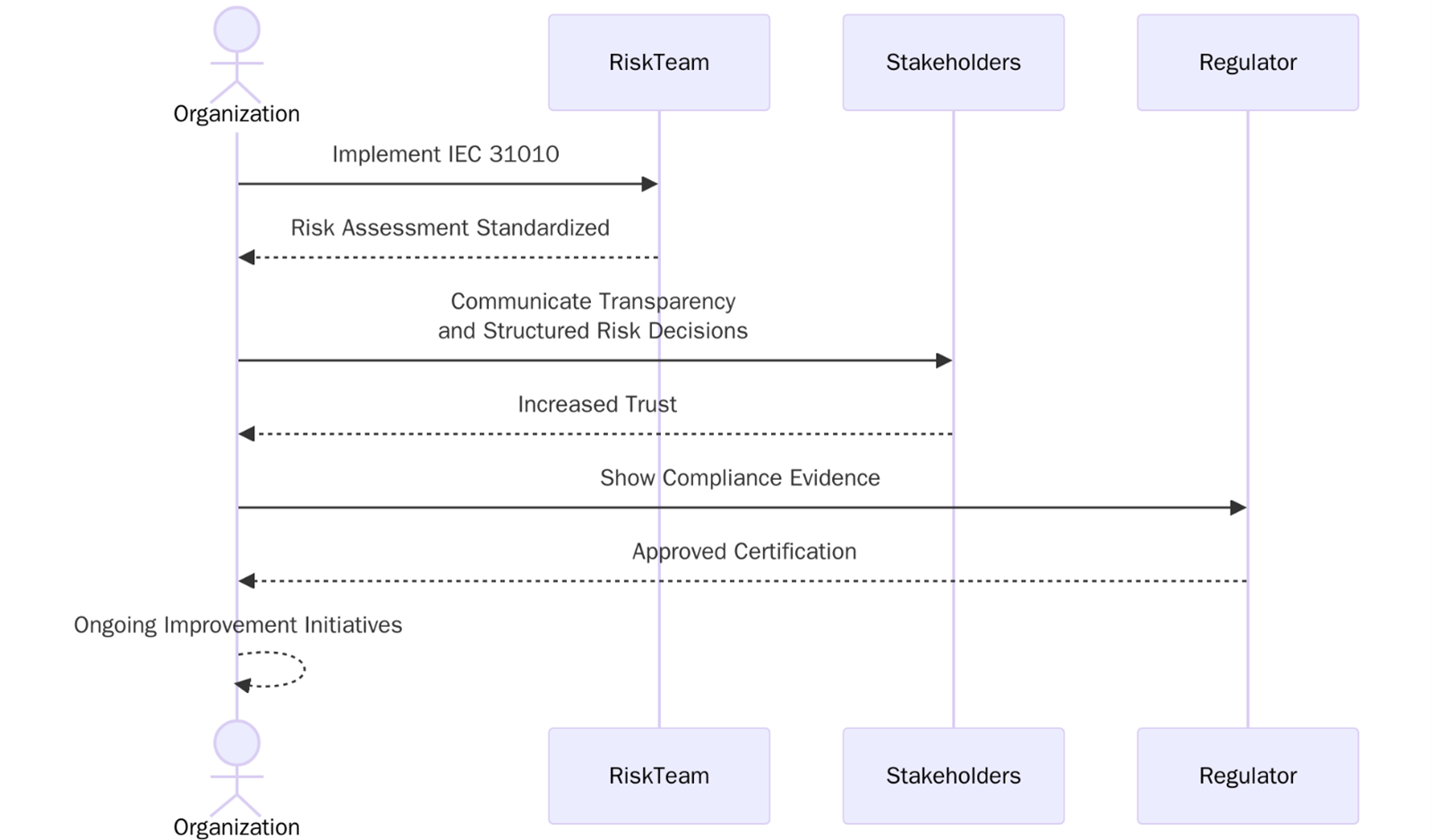
As organizations continue to face growing risks from cyber threats, regulatory changes, and economic uncertainty, the demand for smooth risk assessment techniques is expected to increase. In recent years, organizations across various industries will look to implement ISO 31010 to ensure that they can proactively identify and address risks before they escalate. Compliance with this standard will not only help organizations meet legal and regulatory requirements but also smooth their ability to remain competitive in a rapidly evolving marketplace.
The certification process for IEC 31010 typically includes the following steps:
The timeline for IEC 31010 certification involves several phases. Initially, the pre-assessment and preparation phase generally takes 1-2 months, during which the organization reviews its current risk management processes. The Stage 1 audit lasts around 1 month, focusing on reviewing documentation and systems. The Stage 2 audit involves an in-depth assessment of the organization’s practices and can take 1-2 months. Certification issuance happens within 3-6 months, depending on the audit findings and the organization’s readiness for certification.
The cost of IEC 31010 certification varies depending on factors such as the size of the organization, the complexity of its operations, and the scope of the risk assessment processes. The costs generally include:
Audit Fees is the Fees for the certification body’s audit process. Training Costs are the Costs for educating staff on risk assessment methods and techniques. Ongoing Maintenance are Costs for regular audits, recertification, and maintaining compliance every 3 years.
At Pacific Certifications, we provide best auditing and certification services for IEC 31010. Our experts will guide you through the certification process, ensuring that your organization applies the correct risk assessment techniques and meets the highest standards for risk management. We offer:
For audits and certification, contact support@demo.pacificcert.com.
Various training courses are available to help organizations comply with IEC 31010, including:
Pacific Certifications provides accredited training programs. If your organization is looking for IEC 31010 training, our team is equipped to help you
Contact Pacific Certifications to begin your certification journey today!
Suggested Certifications –
Read more: Pacific Blogs

Get a rough Estimate for your Required Certification by entering your basic details.
This will close in 0 seconds
Get in touch!
This will close in 0 seconds