
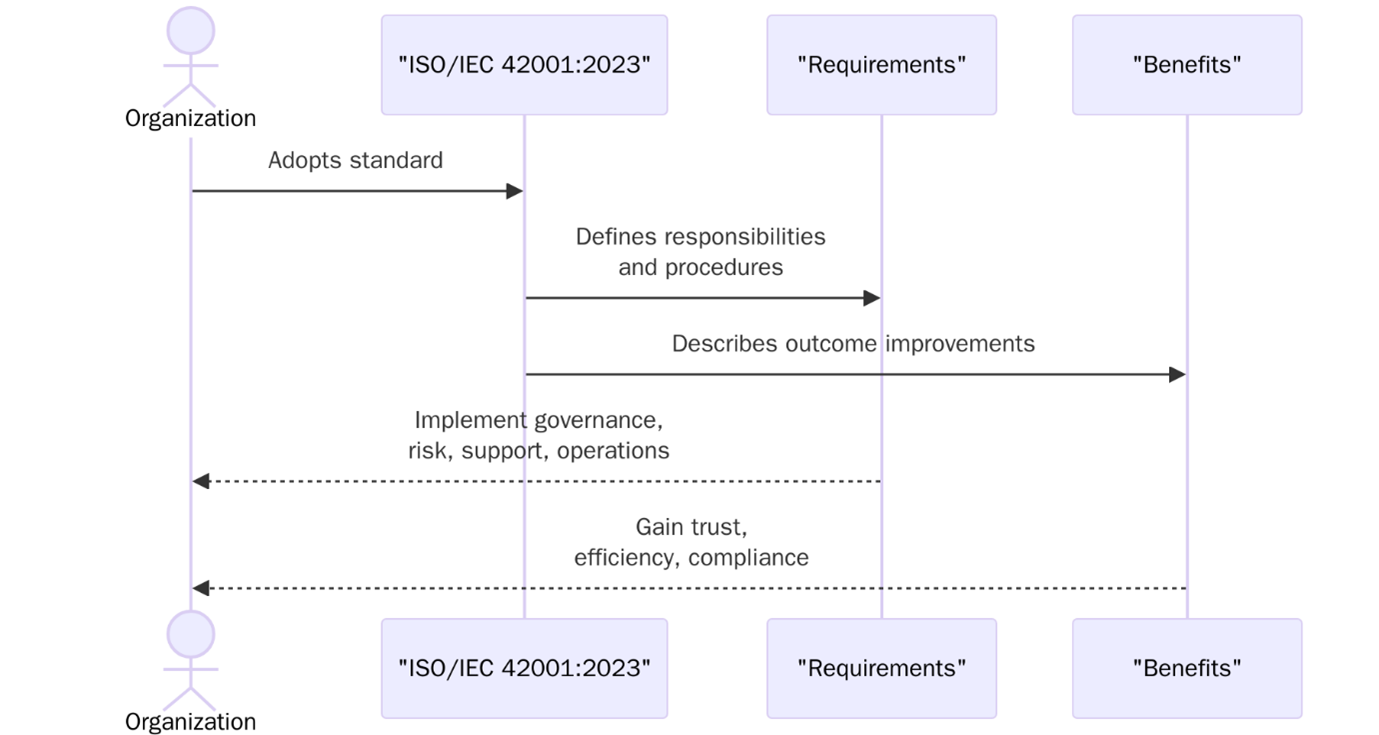
ISO/IEC 42001:2023 is the world’s first international standard that specifies requirements for a management system for artificial intelligence (AI). Developed by ISO and IEC, this groundbreaking standard provides organizations with a structured framework to govern, manage and deploy AI systems responsibly, ethically and effectively.
ISO/IEC 42001 addresses organizational governance, covering risks, ethics, transparency, accountability, data management, and human oversight. The standard helps in building trust in AI and ensures that AI use aligns with laws, societal values, and stakeholder expectations.
Applicable to any organization developing, using, or managing AI systems, ISO/IEC 42001 is a critical step in establishing governance around this fast-evolving technology.
Need help aligning your AI practices with ISO/IEC 42001? Contact support@demo.pacificcert.com
ISO/IEC 42001:2023 applies to:
The standard is technology-neutral and applies regardless of the algorithm, model, or data structure. Whether you’re using generative AI, natural language processing (NLP), image recognition, or decision-support systems, ISO/IEC 42001 ensures that your organization applies ethical and legally aligned governance.
Want to know if ISO/IEC 42001 applies to your use of AI? Contact us at support@demo.pacificcert.com!
ISO/IEC 42001 is a certifiable management system standard. Organizations can demonstrate their conformance through third-party audits and obtain formal certification.
The Certification Process Involves:
We provide complete certification guidance, from audit to post-certification compliance. Contact support@demo.pacificcert.com for details!
Clause | Title | Description |
1 | Scope | Defines the applicability of the standard to organizations that provide or use AI-based products or services. |
2 | Normative References | Lists references that are essential for the application of this standard. |
3 | Terms and Definitions | Defines key terms used in the context of AI, including explainability, bias, robustness, etc. |
4 | Context of the Organization | Requires the organization to identify internal and external issues relevant to its AI systems and stakeholders. |
5 | Leadership | Describes responsibilities of top management in establishing AI policy, roles, and accountability for AIMS. |
6 | Planning | Covers identification of AI risks and opportunities, objectives, and planning actions to address them. |
7 | Support | Outlines requirements for resources, competence, awareness, communication, and documentation related to AI systems. |
8 | Operation | Focuses on planning, designing, implementing, validating, and maintaining AI systems in a responsible and secure manner. |
9 | Performance Evaluation | Involves monitoring, measuring, analyzing, and evaluating the performance and compliance of the AI management system. |
10 | Improvement | Specifies actions for continual improvement, nonconformity management, and corrective actions in the AI lifecycle. |
Successful implementation of ISO/IEC 42001 requires organizations to shift from ad hoc AI practices to formalized AI governance.
Steps to implement include:
Need help with ISO/IEC 42001 implementation or AI governance strategy? Reach us at support@demo.pacificcert.com!
Organizations implementing ISO/IEC 42001 will need to maintain:
We provide audit and certification support for developing AI governance documentation. Contact support@demo.pacificcert.com!
ISO/IEC 42001 applies to any organization that:
If you are unsure about your eligibility or readiness, contact us at support@demo.pacificcert.com for a consultation.
The cost of ISO/IEC 42001 certification depends on several key factors, including the size of the company, the number of employees and locations, and the complexity of the AI systems being used or developed. If your company already follows other ISO standards like ISO 27001 or ISO 9001, the cost may be lower due to easier integration.
Costs also depend on whether you need help with documentation, internal audits, or training before the main certification audit. Finally, the total cost is based on the certification body’s fees and whether the audit is done onsite or remotely.
Pacific Certifications offers cost-effective certification packages contact us today support@demo.pacificcert.com for a quote!
Week | Activities |
Week 1 | Gap analysis, scoping, and stakeholder alignment |
Week 2 | Policy development and risk framework setup |
Week 3 | Technical and ethical control implementation |
Week 4 | Internal audits, training, and corrective actions |
Week 5 | Management review and performance validation |
Week 6 | Third-party certification audit and compliance adjustments |
ISO/IEC 42001 requires organizations to implement an AI Management System (AIMS) covering:

Need help translating these requirements into your AI systems? Contact support@demo.pacificcert.com today!
As of 2025, AI regulations are tightening globally. The EU AI Act, set to take effect in stages from 2025–2026, introduces risk-based compliance obligations for AI systems. Similarly, India’s Digital India Act, the U.S. NIST AI Risk Framework, and the OECD AI Principles demand accountability and transparency in AI usage.
According to a 2025 McKinsey Global AI Survey, 61% of organizations using AI in high-stakes decisions lack formal governance systems. ISO/IEC 42001 provides the urgently needed structure to fill this gap.
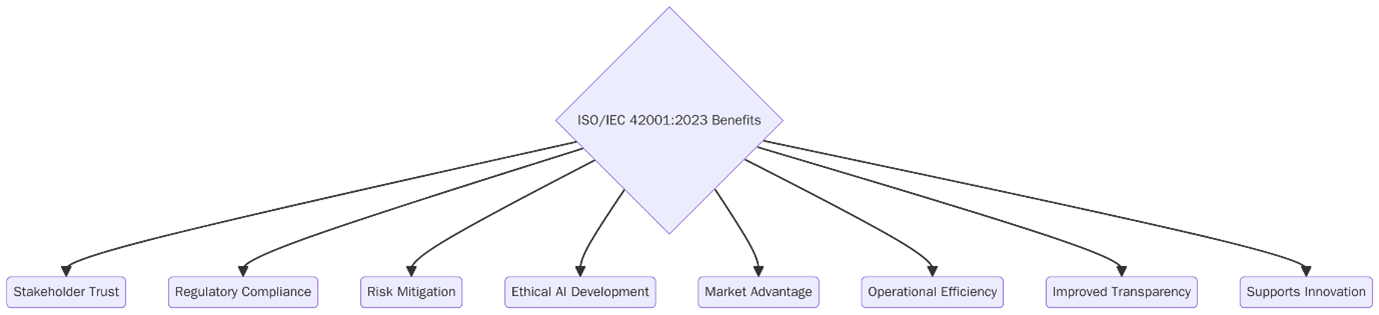
Companies adopting ISO/IEC 42001 are leading in AI ethics, winning procurement contracts, reducing regulatory risk, and building sustainable innovation ecosystems.
Want to future-proof your AI programs? Let’s talk, email us at support@demo.pacificcert.com or call at 91-8595603096
At Pacific Certifications, we offer:
Our team works with AI startups, enterprise tech teams, universities, and public institutions to help govern AI responsibly and confidently. Start your ISO/IEC 42001 journey with expert support, contact support@demo.pacificcert.com.
Contact Pacific Certifications to begin your certification journey today!
Suggested Certifications –
Read more: Pacific Blogs
Get a rough Estimate for your Required Certification by entering your basic details.
This will close in 0 seconds
Get in touch!
This will close in 0 seconds