
ISO 30301:2019 sets out the requirements for establishing, implementing, maintaining, and improving a Management System for Records (MSR) within an organization. It is part of the ISO 30300 series, which focuses on enhancing accountability, transparency, and efficiency by ensuring records are properly created and preserved throughout their lifecycle.
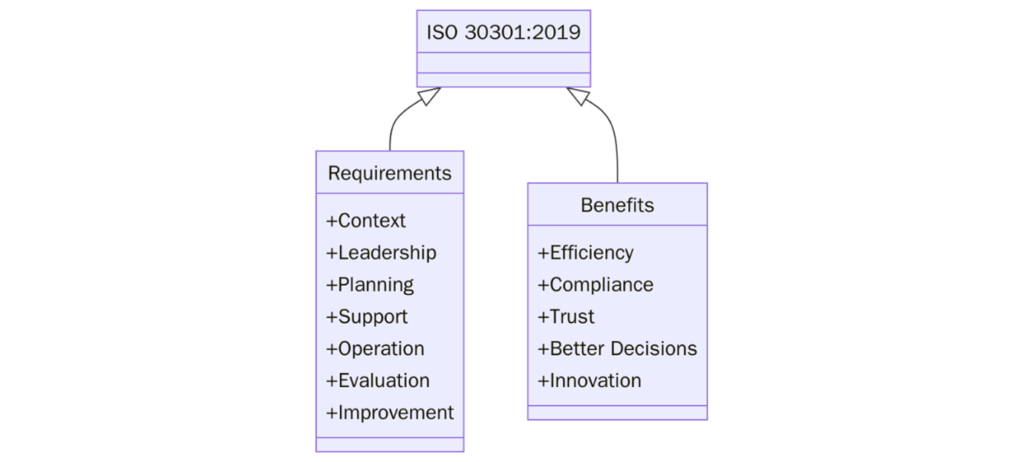
This standard provides a systematic approach to records management that aligns with organizational policies, legal and regulatory obligations, and broader information governance strategies. ISO 30301 is applicable to both digital and physical records and is designed to support organizational objectives, business continuity and compliance requirements.
If you are looking for ISO 30301 certification, contact us at support@demo.pacificcert.com
The purpose of ISO 30301 is to:
ISO 30301 applies to any organization, public or private, large or small, that needs to ensure reliable and systematic records management. It is suitable for organizations across all sectors and industries, including government bodies, educational institutions, healthcare organizations, financial services, legal firms, and more.
Applicability:
Clause | Title | Description |
1 | Scope | Outlines the standard’s applicability and boundaries. |
2 | Normative References | Lists related ISO standards and documents referenced for implementation. |
3 | Terms and Definitions | Provides definitions for core terms such as records, metadata, and management system. |
4 | Context of the Organization | Requires understanding external/internal issues, stakeholders, and records-related obligations. |
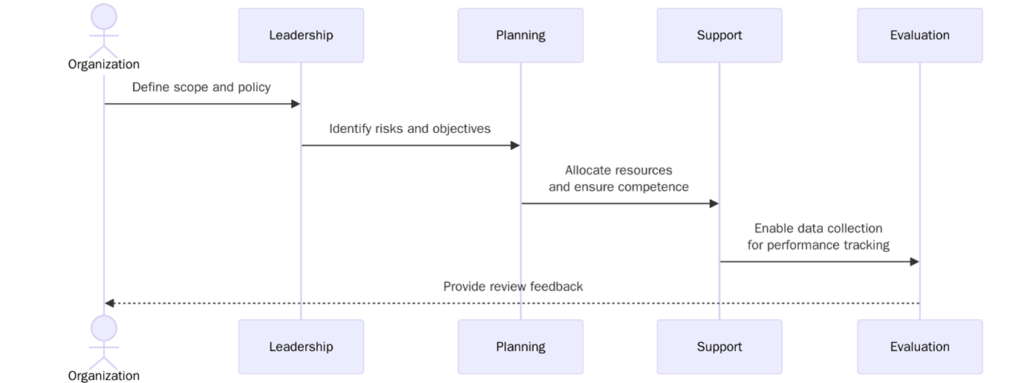
5 | Leadership | Outlines leadership roles in setting the policy, direction, and commitment for the records system. |
6 | Planning | Involves identifying risks and opportunities, setting objectives, and aligning the MSR with organizational goals. |
7 | Support | Specifies resource allocation, staff competence, training, and documentation control. |
8 | Operation | Covers the implementation and control of records management processes and procedures. |
9 | Performance Evaluation | Requires monitoring, internal audits, and management review of the MSR’s effectiveness. |
10 | Improvement | Covers nonconformity handling, corrective actions, and continual improvement processes. |
To implement ISO 30301 effectively, organizations should:
If you require support in preparing for ISO 30301 certification, contact us at support@demo.pacificcert.com

ISO 30301 certification process can span 6 to 10 weeks, depending on the organization’s readiness and complexity.
Week | Activity | Description |
Week 1 | Application Submission & Scope Review | Define scope, number of departments/sites, and record types. |
Week 2–3 | Documentation Review | Review of policies, retention schedules, and recordkeeping procedures. |
Week 4–5 | Stage 1 Audit | Evaluate readiness and compliance of documentation and internal controls. |
Week 6–7 | Stage 2 Audit | On-site or remote audit to verify implementation and operational effectiveness. |
Week 8–9 | Audit Report & Corrective Actions (if any) | Identify nonconformities and allow time for resolution. |
Week 10 | Certification Decision & Certificate Issuance | Issue ISO 30301 certificate upon successful audit results. |
If you are looking for ISO 30301 certification, contact us at support@demo.pacificcert.com
The cost of ISO 30301 certification varies depending on:
For a tailored cost estimate, contact us at support@demo.pacificcert.com!
As an ABIS-accredited certification body, Pacific Certifications offers independent audit and certification services for ISO 30301.
We assist with:
If you are looking for ISO 30301 audit and certification, contact us at support@demo.pacificcert.com
Contact Pacific Certifications to begin your certification journey today!
Suggested Certifications –
Read more: Pacific Blogs

Get a rough Estimate for your Required Certification by entering your basic details.
This will close in 0 seconds
Get in touch!
This will close in 0 seconds