
ISO 16603:2004 specifies a laboratory test method to evaluate the resistance of protective clothing materials to penetration by synthetic blood under various levels of pressure. It serves as a preliminary screening procedure to determine whether garments such as surgical gowns, gloves, aprons and other personal protective equipment (PPE) can effectively prevent blood and body fluid exposure, thereby safeguarding healthcare workers and laboratory personnel from infectious hazards.
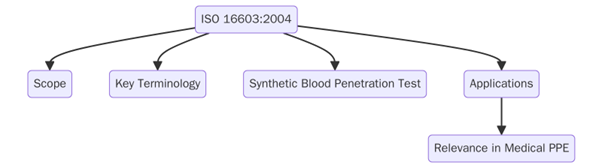
This standard plays a key role in infection control strategies, especially in environments with a risk of HIV, hepatitis, or other bloodborne pathogen transmission.
If you are looking for ISO 16603 certification, contact us at support@demo.pacificcert.com
The purpose of ISO 16603 is to:
This test is often a prerequisite for ISO 16604:2004, which tests for viral penetration using a bacteriophage challenge.
ISO 16603 applies to materials used in the manufacture of single-use or reusable protective clothing, primarily for healthcare, laboratory, and emergency response applications. The test is limited to penetration resistance under synthetic blood challenge and does not cover the mechanical durability or overall garment design.
Applicability:
If your PPE products require certification for body fluid resistance, contact us at support@demo.pacificcert.com
Clause | Title | Description |
1 | Scope | Defines the range of application for the test method. |
2 | Normative References | Lists standards required for proper implementation. |
3 | Terms and Definitions | Provides terminology for synthetic blood, penetration, and protective clothing. |
4 | Principle | Explains the concept of using synthetic blood under pressure to test material resistance. |
5 | Apparatus | Describes the synthetic blood solution, test cell, and pressure system. |
6 | Reagents and Materials | Specifies synthetic blood composition and conditioning requirements. |
7 | Test Specimens | Sample preparation instructions for accurate testing. |
8 | Procedure | Step-by-step instructions to conduct the test under varying pressures. |
9 | Interpretation of Results | Criteria for determining penetration and material classification. |
10 | Test Report | Requirements for documenting pressure levels, results, and pass/fail outcomes. |
Class | Pressure Level | Resistance Level |
Class 1 | 0 kPa | Minimal resistance |
Class 2 | 1.75 kPa | Low resistance |
Class 3 | 3.5 kPa | Moderate resistance |
Class 4 | 7.0 kPa | High resistance |
Class 5 | 14.0 kPa | Very high resistance |
Class 6 | 20.0 kPa | Maximum tested resistance |
ISO 16603 describes a test method. However, the test evaluates materials at six increasing levels of synthetic blood pressure resistance, ranging from 0 to 20 kPa.
Below are the key requirements:
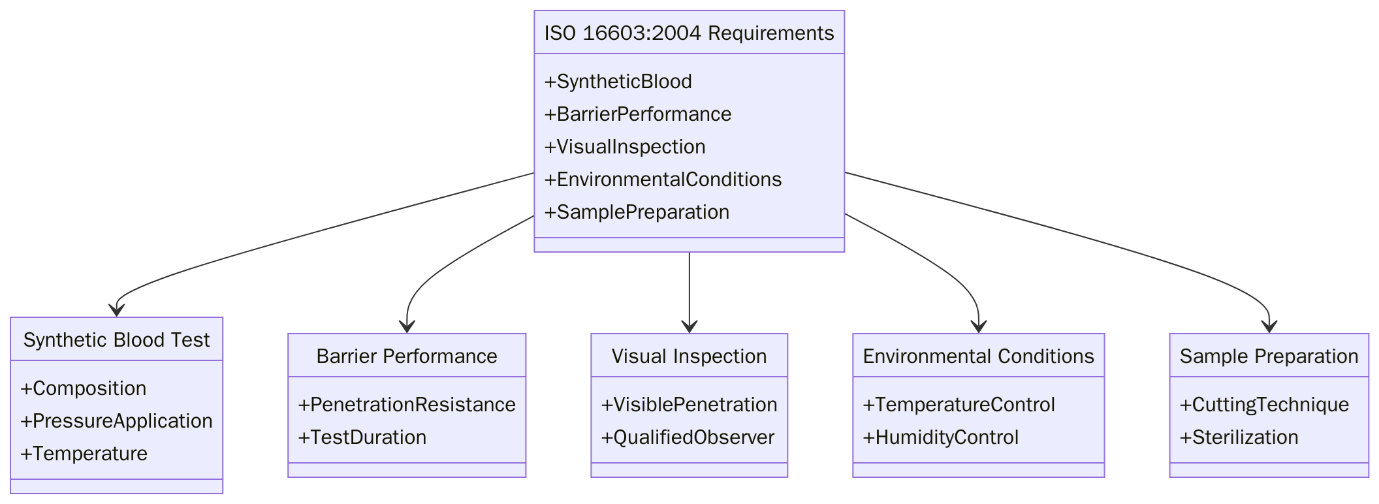
If you need audit assistance for ISO 16603, contact us at support@demo.pacificcert.com
This standard serves as a preliminary screening tool to determine whether a protective material has sufficient barrier performance before undergoing more complex viral penetration tests such as ISO 16604. Below are the benefits:
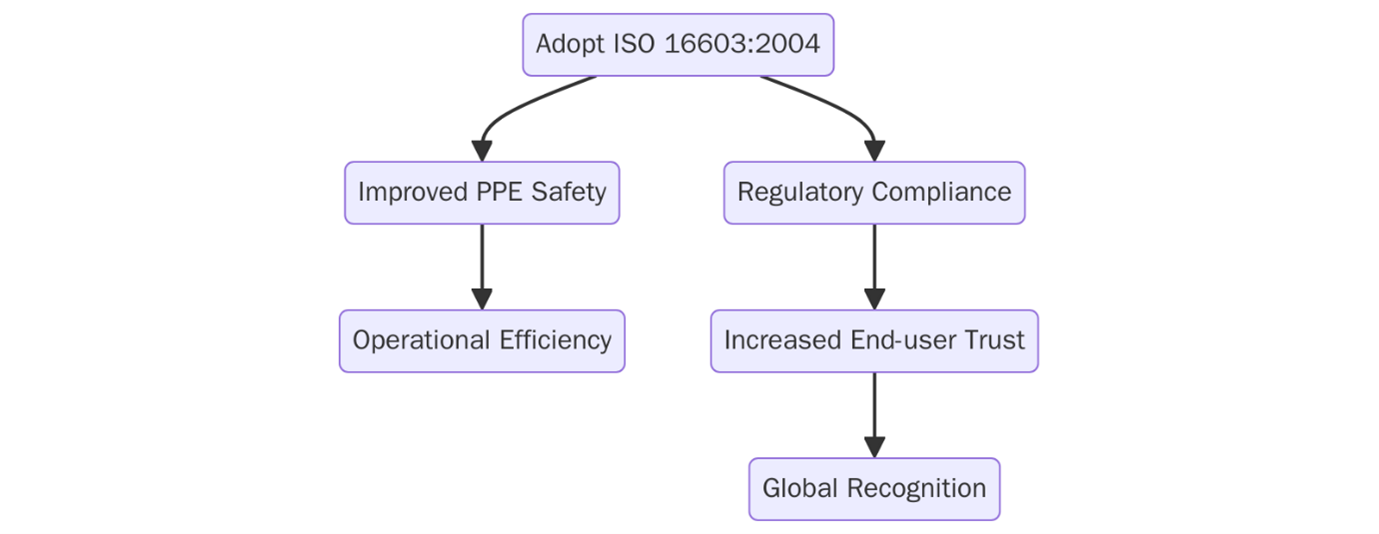
If your PPE products need ISO 16603 certification, contact us at support@demo.pacificcert.com
The total time to achieve ISO 16603 testing and certification typically ranges between 2 to 4 weeks, depending on laboratory capacity, material complexity and documentation readiness.
Week | Stage | Activity |
Week 1 | Application & Sample Submission | Submission of product samples and technical documentation for review. |
Week 2 | Testing at Accredited Laboratory | Execution of synthetic blood penetration testing at multiple pressure levels. |
Week 3 | Report Compilation & Review | Laboratory prepares detailed report and result analysis. Certification body reviews the outcome. |
Week 4 | Certification Issuance | Certificate of compliance issued upon successful test results and review. |
For detailed guidance or to begin the ISO 16603 process, contact us at support@demo.pacificcert.com
Pacific Certifications, accredited by ABIS, offers independent audit and certification services for PPE standards, including ISO 16603:2004.
We assist with:
If you are looking for ISO 16603 certification, contact us at support@demo.pacificcert.com
Contact Pacific Certifications to begin your certification journey today!
Suggested Certifications –
Read more: Pacific Blogs

Get a rough Estimate for your Required Certification by entering your basic details.
This will close in 0 seconds
Get in touch!
This will close in 0 seconds