
ISO 11623 is an international standard that provides guidelines for the design, construction, testing, and maintenance of composite gas cylinders and tubes. These cylinders are commonly used for storing and transporting gases under pressure, and they are made from composite materials, such as fibre-reinforced plastics, that offer a lightweight yet durable solution. This standard addresses the specific requirements for composite cylinders and tubes, ensuring their safe use in a variety of industries, including industrial gas storage, aerospace, and automotive sectors. ISO 11623 specifies the necessary safety and performance standards for these containers, which are crucial in preventing accidents, leaks, and failures during their lifecycle.
The standard ensures that composite cylinders and tubes meet stringent safety, reliability, and environmental standards, providing essential guidelines for manufacturers, regulators, and users alike.
For more information on how to comply with these requirements, contact us at support@demo.pacificcert.com.
The purpose of ISO 11623 is to establish a uniform and comprehensive set of requirements for composite cylinders and tubes used in the storage and transportation of gases. By setting clear standards for the design, testing, and maintenance of these containers, the standard aims to reduce the risk of accidents, ensure product longevity, and promote the safe handling of pressurized gases. The standard is designed to protect public health and safety while ensuring that composite cylinders are reliable for use in various applications where safety and performance are critical.
ISO 11623 applies to composite cylinders and tubes designed for the storage and transport of gases under pressure. It is relevant for industries that use composite materials for gas containment, such as aerospace, automotive, industrial gas storage, and medical applications. The standard covers the entire lifecycle of composite cylinders and tubes, including design, construction, testing, and maintenance. It also specifies requirements for requalification and periodic inspection to ensure the continued safety of these containers. This standard is applicable globally and is essential for manufacturers and users of composite cylinders to ensure compliance with safety regulations and best practices.
Clause Number | Title |
| Description |
Clause 1 | Scope | Defines the scope of the standard and specifies the types of composite cylinders and tubes covered. | |
Clause 2 | Normative References | Lists the standard and documents referenced in ISO 11623 | |
Clause 3 | Terms and Definitions | Provides key terms and definitions to ensure consistency in the interpretation of the standard. | |
Clause 4 | Design and Construction | Specifies requirements for the design, material selection, and construction of composite cylinders and tubes. | |
Clause 5 | Testing and Performance Requirements | Defines the testing methods and performance criteria for composite cylinders, including pressure testing and burst pressure standards. | |
Clause 6 | Inspection and Maintenance | Describes requirements for regular inspection, maintenance, and requalification of composite cylinders to ensure ongoing safety. | |
Clause 7 | Marking and Documentation | Outlines the labelling, marking, and documentation requirements for composite cylinders and tubes, ensuring traceability and compliance. | |
Clause 8 | Transport and Storage | Provides guidelines for the safe transport and storage of composite cylinders and tubes. |
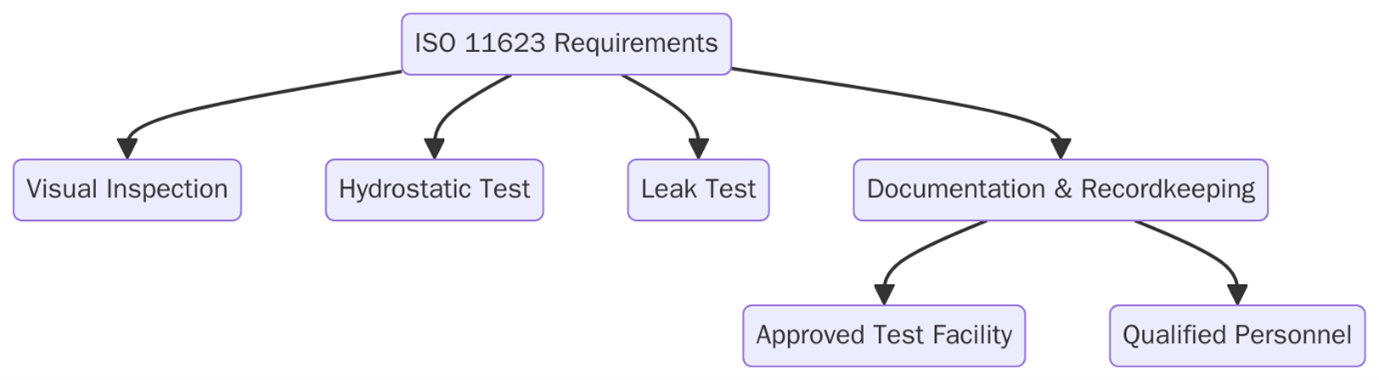
ISO 11623:2023 sets out several key requirements to ensure that composite cylinders and tubes are safe and reliable for use. Some of the primary requirements include:
For more information, contact us at support@demo.pacificcert.com.
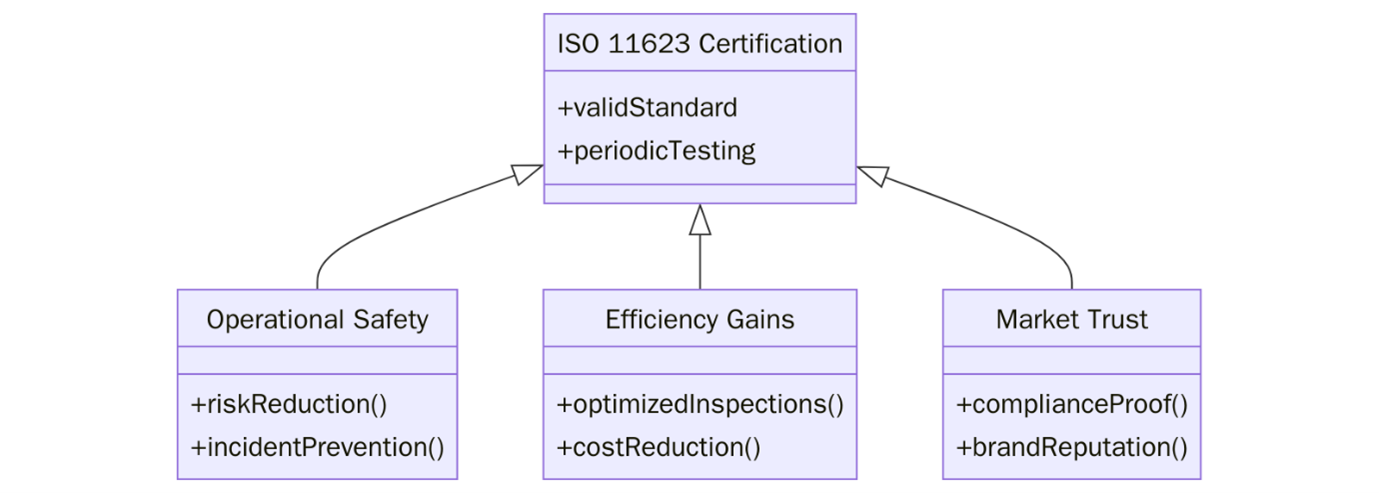
ISO 11623 certification offers several benefits for organizations in the production, inspection, and maintenance of composite gas cylinders and tubes. Achieving certification helps improve the credibility of the business and ensures the safety and reliability of the products. Below are some of the key benefits of obtaining ISO 1162 certification:
As the demand for lightweight, durable, and safe gas cylinders increases, especially in industries such as aerospace, automotive, and renewable energy, ISO 11623 certification will become increasingly important. Recently, industries that require gas containment will look for certified composite cylinders to ensure safety, reliability, and regulatory compliance. As regulatory environments tighten, certification to this standard will be crucial for manufacturers to remain competitive and compliant in global markets.
The certification process for ISO 11623 typically includes the following steps:
For audits and certification, contact support@demo.pacificcert.com.
The timeline for ISO 11623 certification involves multiple phases. Initially, the pre-assessment and preparation phase takes around 1-2 months, during which the organization reviews and adjusts its practices to meet the standard. The Stage 1 audit, which focuses on documentation and system review, takes around 1 month. The Stage 2 audit, which includes a thorough evaluation of the design, testing, and inspection processes, takes around 1-2 months. Certification issuance occurs within 3-6 months, depending on the audit outcomes and the organization’s readiness for approval.
The cost of ISO 11623 certification can vary depending on several factors, including the size and complexity of the organization and the number of composite cylinders produced. Typically, costs will include:
Audit Fees for the external audit process carried out by a certification body. Training Cost are the expenses related to educating staff on the standard and best practices for maintaining compliance. Maintenance Cost are Costs for regular inspections, audits, and recertification every 3 years.
For a personalized quote, contact support@demo.pacificcert.com.
At Pacific Certifications, we provide comprehensive auditing and certification services for ISO 11623. Our team of experts will guide you through the entire certification process, ensuring that your composite cylinders meet the necessary safety and performance standards. We offer:
For audits and certification, contact support@demo.pacificcert.com.
Various training courses are available to help organizations comply with ISO 11623, including:
Pacific Certifications provides accredited training programs. If your organization is looking for ISO 11623:2023 training, our team is equipped to help you. Contact us at support@demo.pacificcert.com.
Contact Pacific Certifications to begin your certification journey today!
Suggested Certifications –
Read more: Pacific Blogs

Get a rough Estimate for your Required Certification by entering your basic details.
This will close in 0 seconds
Get in touch!
This will close in 0 seconds