
ISO 11625 is an international standard that outlines the guidelines and requirements for the safe handling of gas cylinders. Gas cylinders are used in a wide variety of applications, such as industrial, medical, and scientific fields, and ensuring their proper handling is crucial for preventing accidents and protecting personnel. This standard provides the necessary procedures and practices for safely transporting, storing, and using gas cylinders to minimize the risk of injury, damage, or contamination. It addresses factors such as pressure, environment, equipment, and procedures involved in handling cylinders safely.
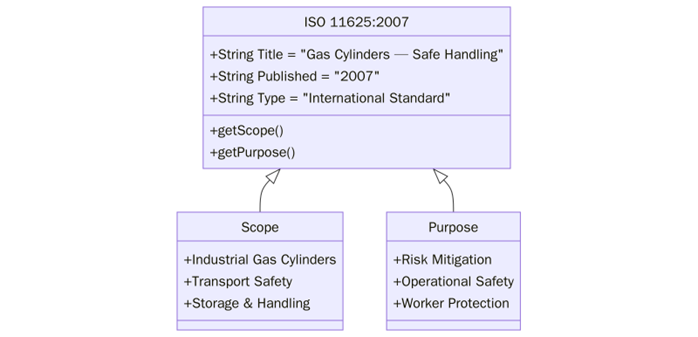
It aims to establish uniform practices to ensure that gas cylinders are managed in a way that upholds safety and reliability across various industries.
For more information, contact us at support@demo.pacificcert.com.
The purpose of ISO 11625 is to provide comprehensive guidance on the safe handling, transportation, and storage of gas cylinders, focusing on the prevention of accidents and ensuring operational safety. By providing a set of clearly defined practices, the standard helps mitigate the risks associated with the high-pressure nature of gas cylinders, including potential rupture, leakage, or mishandling. It ensures that personnel handling gas cylinders are trained in the correct procedures to prevent mishaps, thus safeguarding human health, property, and the environment.
ISO 11625 applies to all sectors that use gas cylinders, including industrial, medical, scientific, and commercial applications. The standard is relevant to organizations involved in the manufacture, transportation, storage, and use of gas cylinders containing a wide range of gases, including oxygen, nitrogen, hydrogen, and carbon dioxide. It provides safety guidelines for personnel who handle cylinders in any capacity and helps businesses ensure compliance with safety regulations. The standard also covers the safe handling of cylinders during activities such as filling, moving, and securing gas cylinders.
Clause Number | Title |
| Description |
Clause 1 | Scope | Defines the scope of the standard and the types of cylinders covered. | |
Clause 2 | Normative References | Lists the referenced standards that support the guidelines in ISO 11625 :2007. | |
Clause 3 | Terms and Definitions | Provides definitions of terms used in the standard to ensure clarity and consistency. | |
Clause 4 | General Safety Requirements | Specifies the safety measures to be followed when handling gas cylinders. | |
Clause 5 | Handling and Transport | Outlines the procedures for safely moving and transporting gas cylinders. | |
Clause 6 | Storage | Details the requirements for the safe storage of gas cylinders. | |
Clause 7 | Use and Disposal | Addresses the safety requirements for using gas cylinders and their disposal after use. | |
Clause 8 | Inspection and Maintenance | Describes the required inspections and maintenance practices to ensure gas cylinders remain in safe condition. |
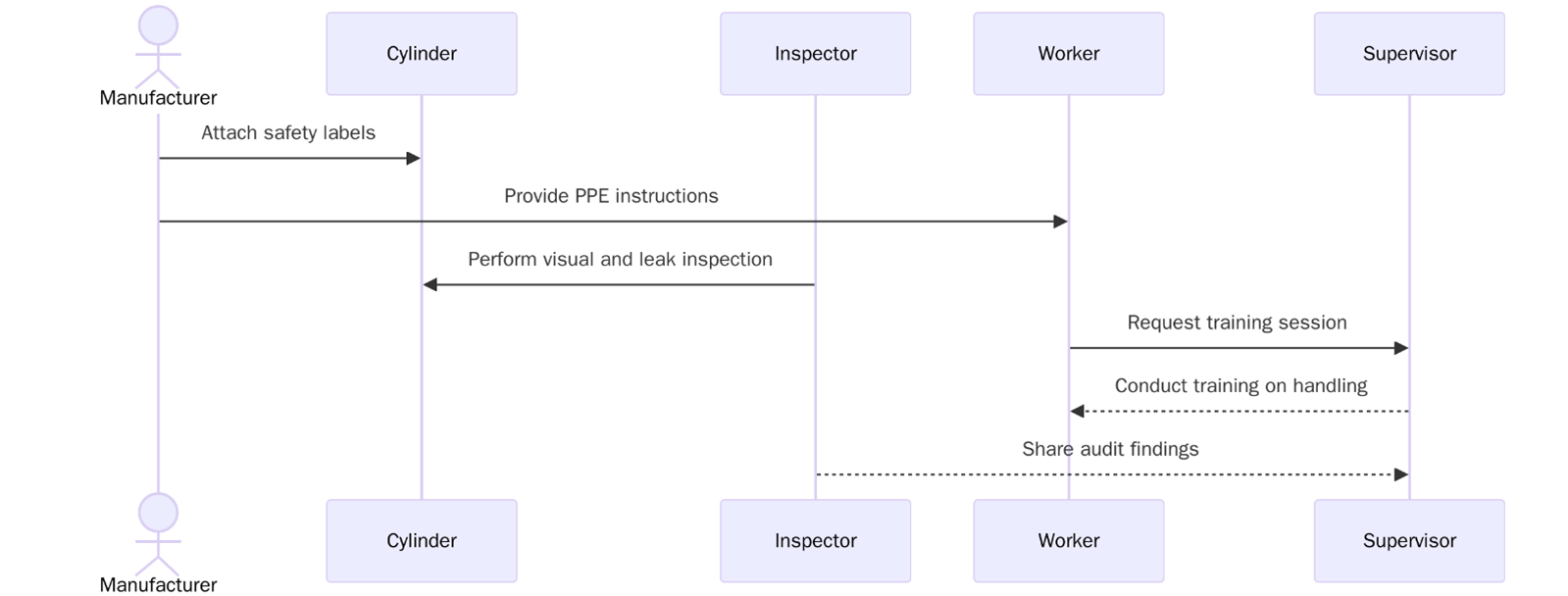
ISO 11625 outlines several key safety requirements for the handling, storage, and transportation of gas cylinders:
For more information, contact us at support@demo.pacificcert.com.
ISO 11625 certification provides several advantages for organizations that handle gas cylinders. The benefits include improved safety, regulatory compliance, and operational efficiency. Below are some of the key benefits of obtaining ISO 11625 certification:
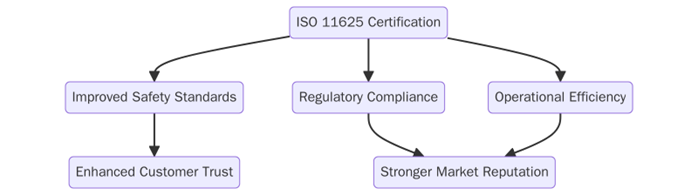
With the growing emphasis on workplace safety and regulatory compliance, ISO 11625 certification will become increasingly important recently. As industries continue to prioritize safety in hazardous environments, the demand for certified safety practices for handling gas cylinders will rise. Regulatory agencies across the globe are tightening safety standards, making ISO 11625 certification a crucial step for companies wishing to stay competitive and meet legal requirements.
The certification process for ISO 11625 involves several key steps:
For audits and certification, contact support@demo.pacificcert.com.
The timeline for ISO 11625 certification spans several months. The pre-assessment and preparation phase usually takes 1-2 months, during which the organization reviews and adjusts its handling practices to meet the standard. The Stage 1 audit, which focuses on documentation and system review, takes approximately 1 month. The Stage 2 audit, which involves a more detailed on-site assessment of safety protocols and practices, takes around 1-2 months. Certification issuance occurs within 3-6 months, depending on the audit findings and the organization’s readiness for approval.
The cost of ISO 11625 certification varies based on the size of the organization, the complexity of its operations, and the number of gas cylinders handled. The cost typically includes:
Audit Fees is the fee for the external audit process performed by a certification body. Training Costs are the Expense for training staff on the safe handling practices outlined in ISO 11625. Maintenance Costs are the Costs for ongoing safety audits and recertification every 3 years.
At Pacific Certifications, we offer comprehensive auditing and certification services for ISO 11625:2007. Our team will guide you through every step of the certification process, ensuring that your organization adheres to the required safety standards for gas cylinder handling. Our services include:
For audits and certification, contact support@demo.pacificcert.com.
Various training courses are available to help organizations comply with ISO 11625, including:
Pacific Certifications provides accredited training programs. If your organization is looking for ISO 11625 training, our team is equipped to help you. Contact us at support@demo.pacificcert.com.
Contact Pacific Certifications to begin your certification journey today!
Suggested Certifications –
Read more: Pacific Blogs

Get a rough Estimate for your Required Certification by entering your basic details.
This will close in 0 seconds
Get in touch!
This will close in 0 seconds