
ISO 14067:2018 is the internationally recognized standard that defines the principles, requirements, and guidelines for the quantification and reporting of the carbon footprint of products (CFP). It is part of the ISO 14000 environmental management family and provides a standardized methodology to calculate the greenhouse gas (GHG) emissions associated with the life cycle of products, from raw material extraction to end-of-life disposal.
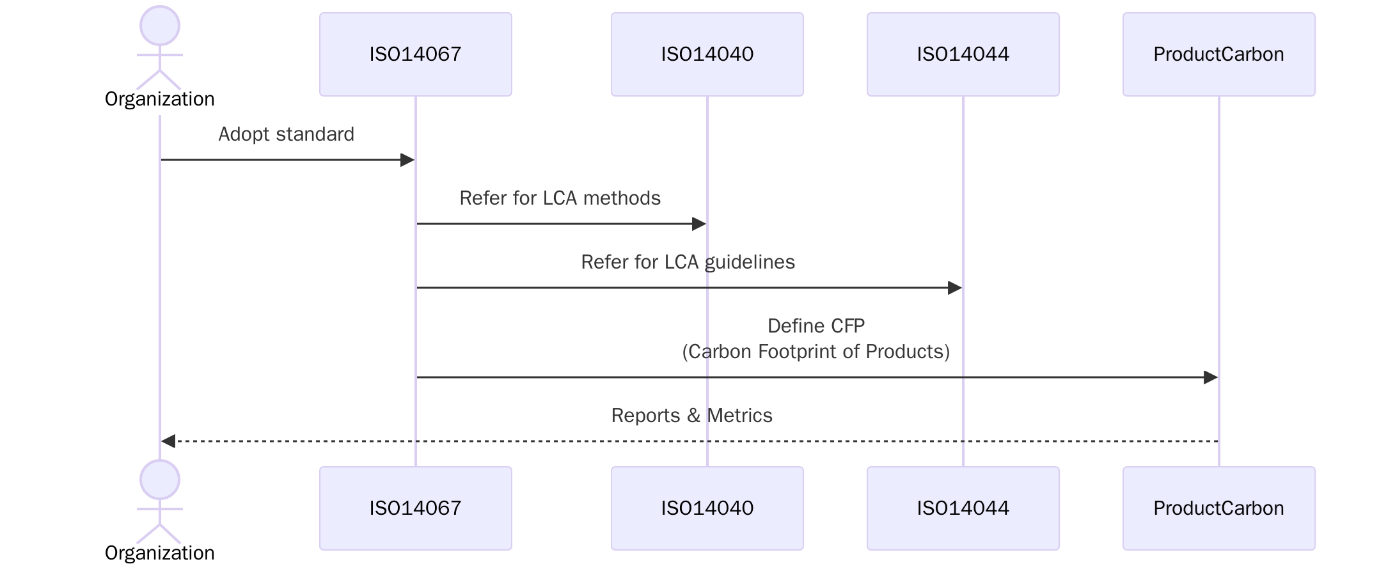
The standard is based on life cycle assessment (LCA) principles as laid out in ISO 14040 and ISO 14044, but it focuses exclusively on climate change impacts in terms of CO₂ equivalents (CO₂e). ISO 14067 supports organizations in identifying key emission hotspots, reducing environmental impact, and enhancing sustainability disclosures.
Need to measure or verify the carbon footprint of your products? Contact us at support@demo.pacificcert.com
ISO 14067 applies to any organization, regardless of industry, size, or geography, that:
The standard is applicable to individual products or product systems, enabling consistent quantification of GHG emissions for a single unit of product or service.
Unsure if ISO 14067 is suitable for your product line? Contact support@demo.pacificcert.com for a suitability review.
The main objective of ISO 14067:2018 is to provide a consistent and transparent approach for:
It serves as the cornerstone for product-level climate impact assessments, helping businesses demonstrate environmental responsibility and support global climate goals.
Implementing ISO 14067 involves a step-by-step approach grounded in life cycle thinking:
Need support, contact support@demo.pacificcert.com!
ISO 14067 requires thorough documentation to ensure transparency and consistency:
ISO 14067 can be implemented by:
If your product has a significant carbon impact or is part of a sustainability strategy, ISO 14067 is essential.
Still unsure about eligibility? Schedule a readiness consultation at support@demo.pacificcert.com.
The cost of ISO 14067 implementation and verification depends on:
Week | Activities |
Week 1 | Scoping session and boundary definition |
Week 2 | Data collection and life cycle inventory development |
Week 3 | Impact assessment and CO₂e calculations |
Week 4 | Documentation, reporting, and review of uncertainties |
Week 5 | Optional: Third-party verification and final CFP disclosure |
We help streamline this timeline based on your internal readiness—contact support@demo.pacificcert.com.
Here is a table summarizing the Clauses of ISO 14067:
Clause Number | Clause Title | Description |
1 | Scope | Defines the scope of the standard, focusing on the quantification and communication of CFP (Carbon Footprint of a Product). |
2 | Normative references | Lists documents that are indispensable for the application of this standard (mainly ISO 14040 and ISO 14044). |
3 | Terms and definitions | Provides definitions for key terms such as carbon footprint, life cycle, GHG emissions, and more. |
4 | Principles | Establishes guiding principles such as transparency, consistency, completeness, accuracy, and relevance. |
5 | Methodological framework | Outlines the overall approach and framework for CFP quantification including life cycle assessment (LCA) principles. |
6 | CFP quantification | Describes specific requirements and options for quantifying the carbon footprint of products. |
7 | CFP study report | Specifies the content and structure required for CFP reports to ensure credibility and transparency. |
8 | Communication of CFP results | Provides guidance on the communication of CFP results, ensuring clarity and avoiding misinterpretation. |
Organizations applying ISO 14067 must:
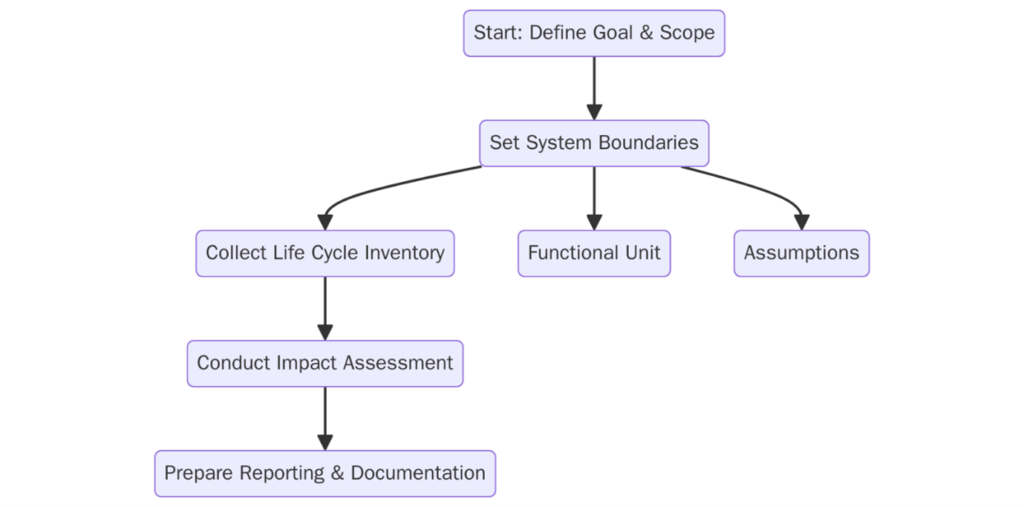
Need a detailed breakdown of each requirement? Email us at support@demo.pacificcert.com.
Below are the key benefits of implementing ISO 14067 standard:
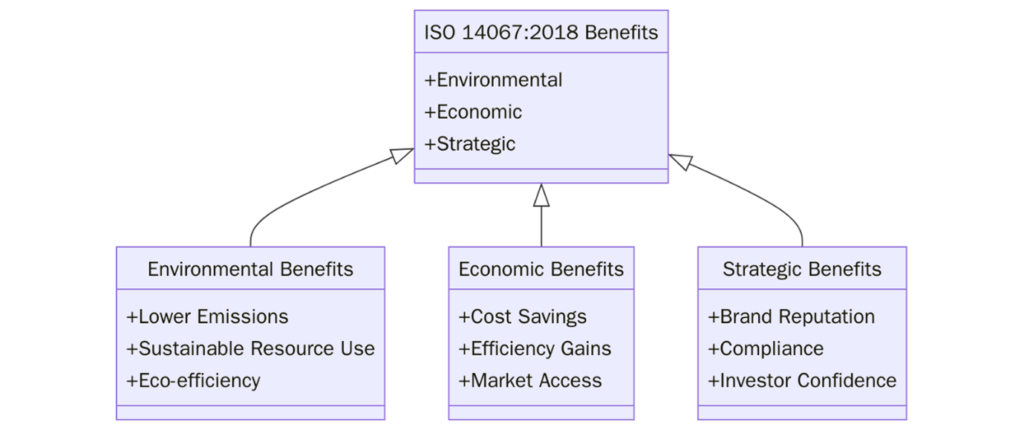
This year, the demand for product-level carbon transparency is surging due to regulatory drivers such as the EU Green Deal, CBAM (Carbon Border Adjustment Mechanism), and SEC climate disclosures and:
According to the World Economic Forum (2024), over 65% of global companies are integrating ISO 14067-aligned product assessments into their sustainability strategy.
With the voluntary carbon market projected to exceed USD 50 billion by 2030, ISO 14067 is becoming a prerequisite for trustworthy offset claims and product-level emissions benchmarking.
Want to future-proof your sustainability claims? Contact support@demo.pacificcert.com.
We offer comprehensive support for ISO 14067:2018, including:
From consumer goods to industrial products, we help quantify, reduce, and communicate your carbon footprint. Start your ISO 14067 journey today, email support@demo.pacificcert.com!
Contact Pacific Certifications to begin your certification journey today!
Suggested Certifications –
Read more: Pacific Blogs

Get a rough Estimate for your Required Certification by entering your basic details.
This will close in 0 seconds
Get in touch!
This will close in 0 seconds