
ISO 18587:2017 defines the requirements for full, human post-editing of machine translation (MT) output within professional translation services. This international standard ensures that machine-generated translations are reviewed and refined by trained linguists to produce output that is comparable to human translation quality.
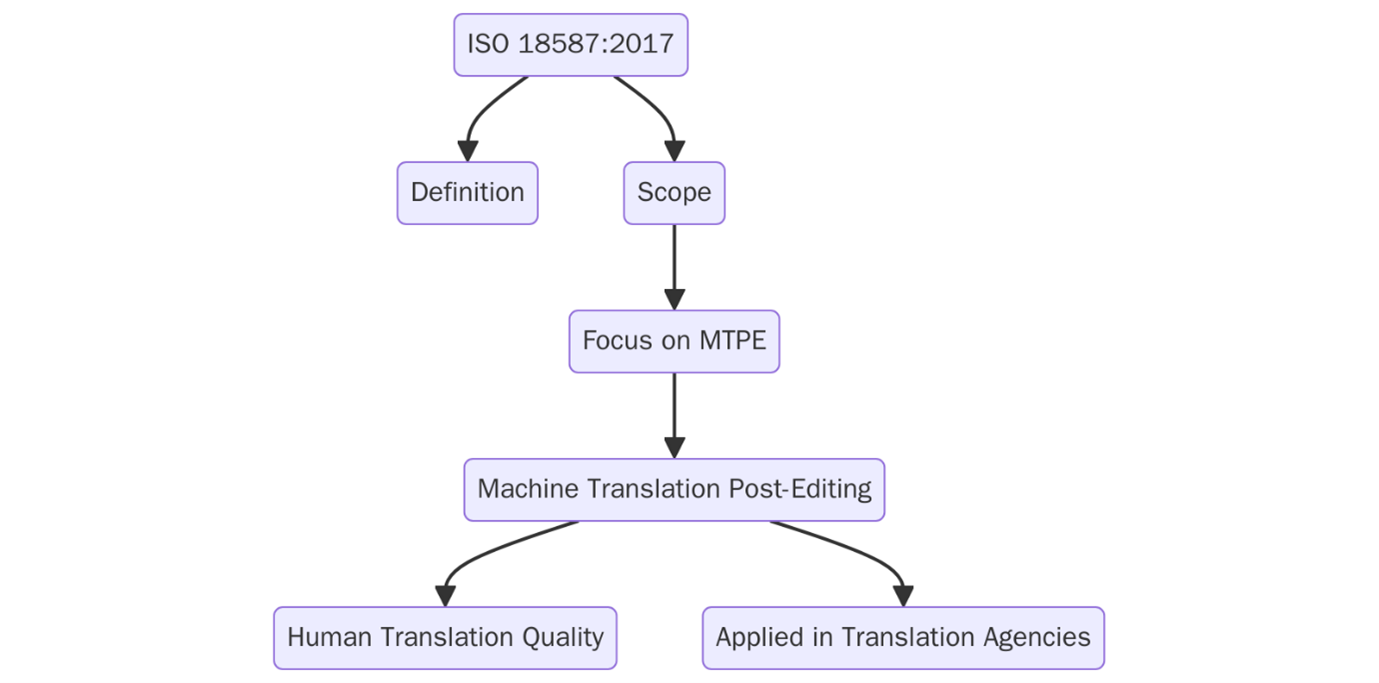
As machine translation technologies like neural machine translation (NMT) and statistical machine translation (SMT) become widely adopted, ISO 18587:2017 establishes clear guidelines to ensure that quality, accuracy and appropriateness are not compromised. It is applicable to translation service providers (TSPs), enterprises, language technology developers, and clients who utilize post-edited MT as part of their localization workflows.
Need support with ISO 18587? Contact us at support@demo.pacificcert.com!
ISO 18587:2017 provides requirements for the process of full post-editing of machine translation output, ensuring the final product meets the same linguistic and quality standards as a fully human-translated text. The standard applies to:
It applies only to full post-editing, not light post-editing or raw MT output use. The standard is relevant across industries from legal to e-commerce translation workflows, where quality and consistency are critical.
Need clarification on ISO 18587 applicability to your translation projects? Email support@demo.pacificcert.com.
Core Requirements of ISO 18587
Section | Key Requirements |
General Principles | Post-editing must achieve the same quality level as human translation |
Human Resources and Competence | Post-editors must be trained linguists with MT post-editing experience |
Pre-Production | Clear client brief, project scope, MT engine description, and expected outcomes |
Post-Editing Process | Full correction of grammar, semantics, style, terminology, formatting, and tone |
Quality Assurance | Review and validation of post-edited content to meet client-specific criteria |
Confidentiality and Security | Protection of sensitive content during post-editing and file handling |
Feedback and Continuous Improvement | Collection of quality data to enhance MT systems and workflows |
These requirements aim to standardize output quality and support consistent delivery across TSPs and clients.
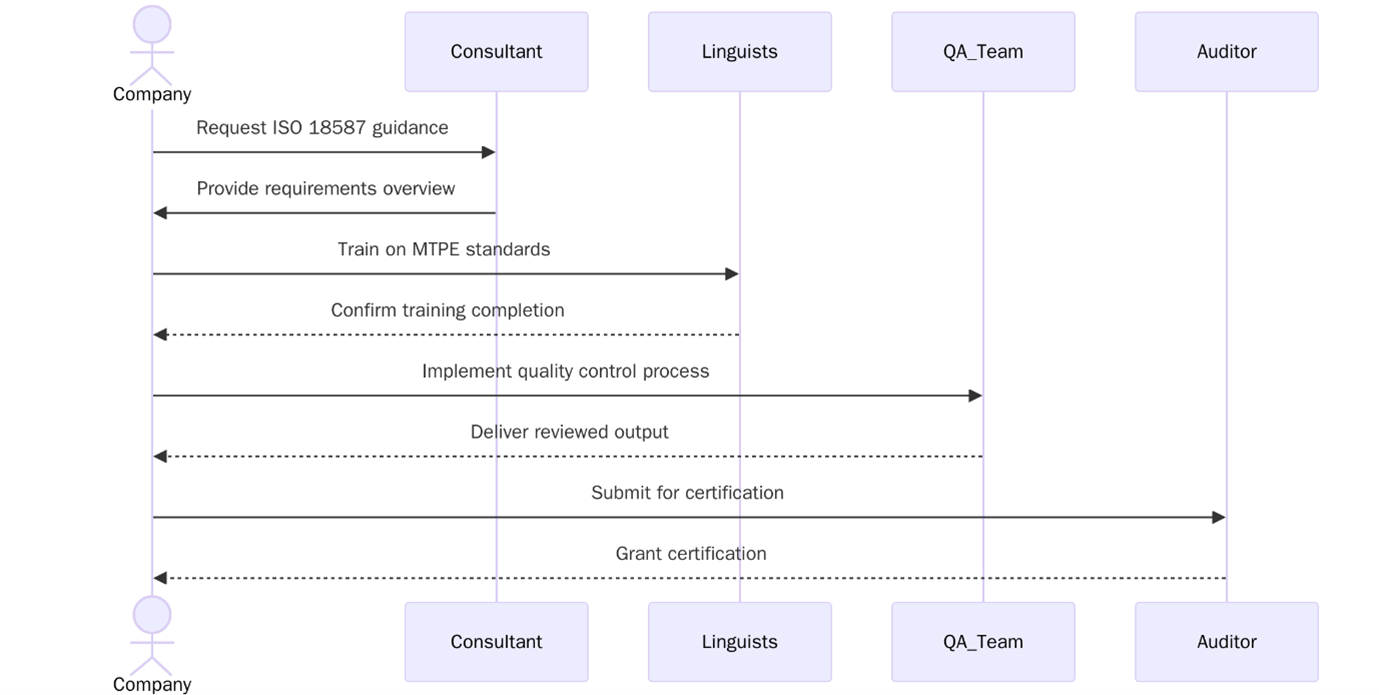
To demonstrate alignment with ISO 18587, maintain the following documentation:
IN this era, machine translation is an integral part of global content strategies. With AI advancements in neural translation models and the increasing demand for real-time localization, organizations are balancing speed and cost with linguistic quality and accountability. ISO 18587 offers these benefits:
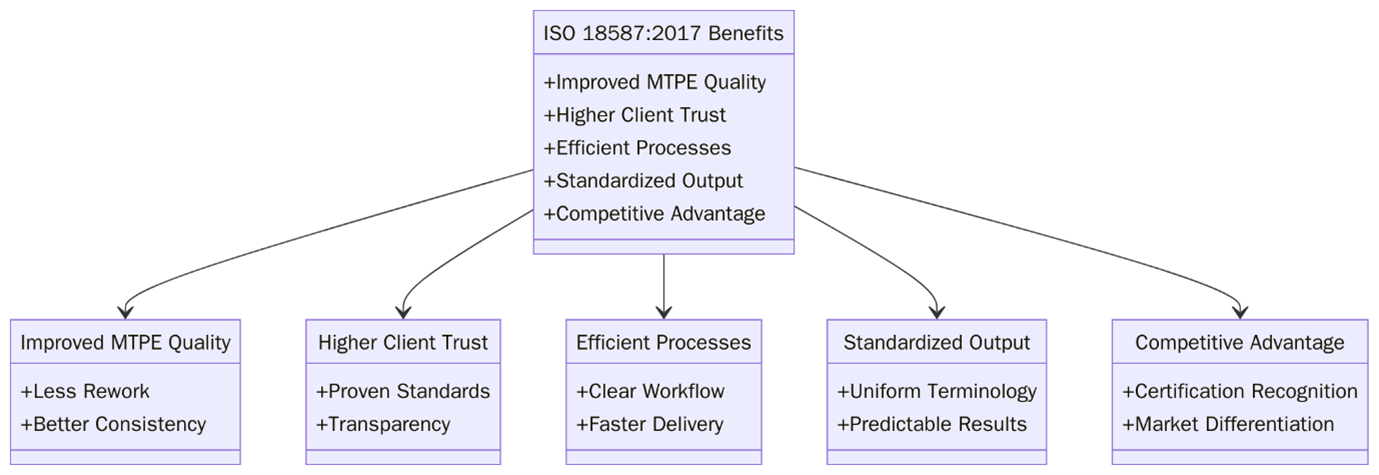
ISO 18587 is now widely referenced in public tenders, vendor contracts, and global content management systems, especially in sectors like legal and e-commerce. Major buyers require assurance that MT output undergoes professional human post-editing, particularly for high-stakes or brand-critical content.
Additionally, with increasing scrutiny on data protection and AI transparency, ISO 18587 provides a neutral, audit-friendly framework for documented language quality, ethical AI integration, and operational reliability in translation.
Want to align your translation workflows with global standards for MT quality? Contact support@demo.pacificcert.com.
As a recognized certification body, Pacific Certifications offers audit and certification services for ISO standards relevant to language service providers, localization teams, and AI-integrated translation environments, including:
We also offer:
To begin your audit or certification aligned with ISO 18587 standards, contact support@demo.pacificcert.com.
Contact Pacific Certifications to begin your certification journey today!
Suggested Certifications –
Read more: Pacific Blogs

Get a rough Estimate for your Required Certification by entering your basic details.
This will close in 0 seconds
Get in touch!
This will close in 0 seconds