
ISO/IEC 29100:2024 establishes a high-level privacy framework that outlines privacy principles and provides guidance on implementing privacy controls in systems that process personally identifiable information (PII). As the demand for stronger privacy protection grows across industries, especially with the rise of AI, IoT, and global data transfers ISO/IEC 29100 serves as a foundation for building privacy-by-design systems aligned with both technological and regulatory requirements.
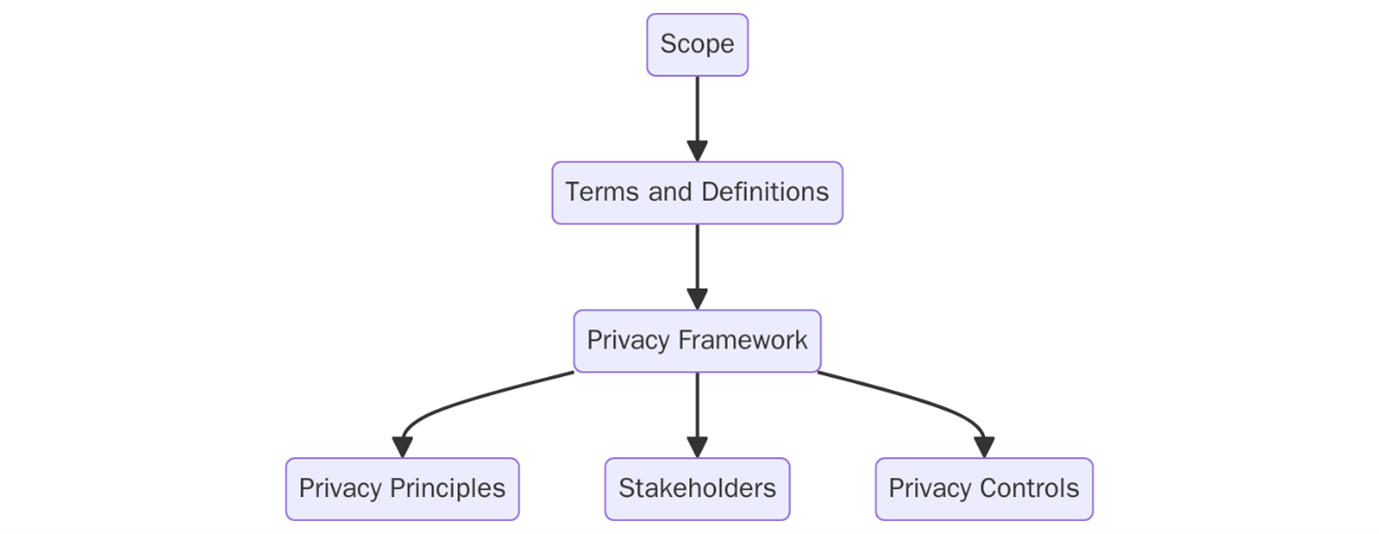
The 2024 revision enhances the original framework by addressing modern challenges in cross-border data flows, cloud computing, data sovereignty, and automated decision-making, making it more relevant to today’s rapidly evolving digital environments.
If you are looking for ISO/IEC 29100 certification alignment or audit support, contact us at support@demo.pacificcert.com
The purpose of ISO/IEC 29100:2024 is to:
Provide a common privacy terminology and structure for implementing data protection measures across systems and services.
Define privacy principles and governance controls applicable to organizations, developers, service providers, and regulators.
Support the development and evaluation of privacy-enhancing technologies (PETs) and architectures.
Align with international legal frameworks, such as the EU GDPR, California Consumer Privacy Act (CCPA), and others, to enable global privacy assurance.
This framework can be applied to designing, building, operating, or auditing systems that collect or process personal data.
ISO/IEC 29100:2024 applies to any organization, system, or technology involved in the processing of personal data. It is applicable regardless of the size or sector of the entity. The standard is technology-neutral and can be applied across on-premise systems, cloud environments, mobile applications, and distributed platforms such as blockchain or AI.
Applicability:
If your organization handles personal data and seeks structured privacy controls, contact us at support@demo.pacificcert.com
Clause | Title | Overview |
1 | Scope | Defines the boundaries of the framework and its application to privacy-related contexts. |
2 | Normative References | Lists the other standards that support ISO/IEC 29100 (e.g., ISO/IEC 27000 series). |
3 | Terms and Definitions | Provides terminology used throughout the standard, ensuring consistent understanding. |
4 | Privacy Framework Overview | Introduces the purpose and general structure of privacy governance. |
5 | Roles and Responsibilities | Defines roles such as data controller, data processor, and data subject within a privacy governance model. |
6 | Privacy Principles | Lists foundational principles for privacy protection (e.g., consent, data minimization, transparency). |
7 | Privacy Safeguards and Controls | Outlines the types of technical and organizational controls to manage PII. |
8 | Application of the Framework | Explains how to integrate the principles and controls into system design, policy, and compliance audits. |
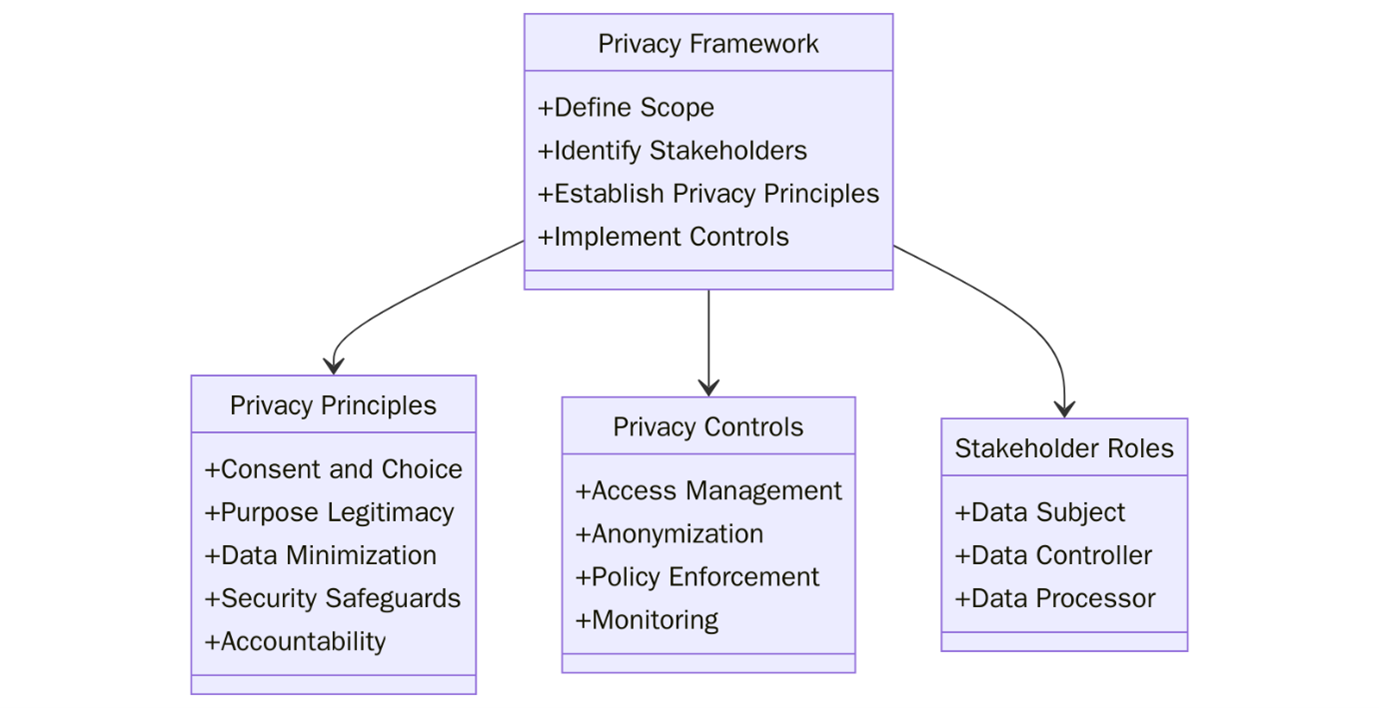
ISO/IEC 29100 defines a set of 11 privacy principles that form the ethical and operational foundation for PII protection:
These principles closely align with global privacy laws and serve as the baseline for data protection policies and technical implementations.
ISO/IEC 29100:2024 is designed to work alongside other ISO/IEC cybersecurity and data protection standards, such as:
If you are working within a broader ISO/IEC 27000 ecosystem, aligning with ISO/IEC 29100 is both logical and beneficial.
To implement ISO/IEC 29100:2024 effectively, organizations should:
If you are planning to assess your privacy posture under this standard, contact us at support@demo.pacificcert.com
ISO/IEC 29100:2024 offers a comprehensive privacy framework that assists organizations in managing personally identifiable information systems. By establishing a common privacy terminology and outlining privacy safeguarding considerations, the standard enhances data protection practices:
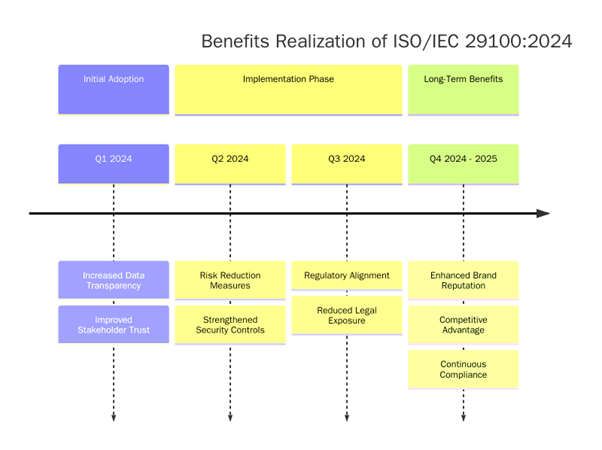
ISO/IEC 29100:2024 establishes a comprehensive privacy framework that assists organizations in managing personally identifiable information (PII) within information and communication technology (ICT) systems. By specifying common privacy terminology, defining roles and responsibilities and outlining privacy safeguarding considerations, the standard enhances data protection practices.
The cost of such certification depends on:
To receive a tailored cost estimate for ISO/IEC 29100 alignment or integrated privacy audits, contact us at support@demo.pacificcert.com
ISO/IEC 29100 timeline follows:
Week | Activity | Details |
Week 1 | Application and documentation review | Submit privacy documentation, data flow maps, and policy framework. |
Week 2–3 | Gap analysis and risk assessment | Identify areas lacking alignment with ISO/IEC 29100 principles. |
Week 4–5 | Audit planning and interviews | Prepare for system audits and stakeholder interviews. |
Week 6 | Audit execution and report issuance | Conduct integrated audits (if with ISO/IEC 27701), review findings. |
Week 7 | Certificate issuance or statement of alignment | Provided upon successful compliance or conformance review. |
For a full certification roadmap, contact us at support@demo.pacificcert.com.
Pacific Certifications, accredited by ABIS, offers independent audit and certification services focused on privacy and information security standards.
We assist with:
If you are looking for ISO/IEC 29100 alignment or privacy certification, contact us at support@demo.pacificcert.com
Contact Pacific Certifications to begin your certification journey today!
Suggested Certifications –
Read more: Pacific Blogs

Get a rough Estimate for your Required Certification by entering your basic details.
This will close in 0 seconds
Get in touch!
This will close in 0 seconds