
ISO 3632-1:2011 is an international standard that defines the specifications for saffron, derived from the dried stigmas of the Crocus sativus L. flower. Recognized as one of the most valuable spices globally due to its coloring, flavoring, and aromatic properties, saffron must meet specific physical and chemical purity parameters to be classified and traded internationally.
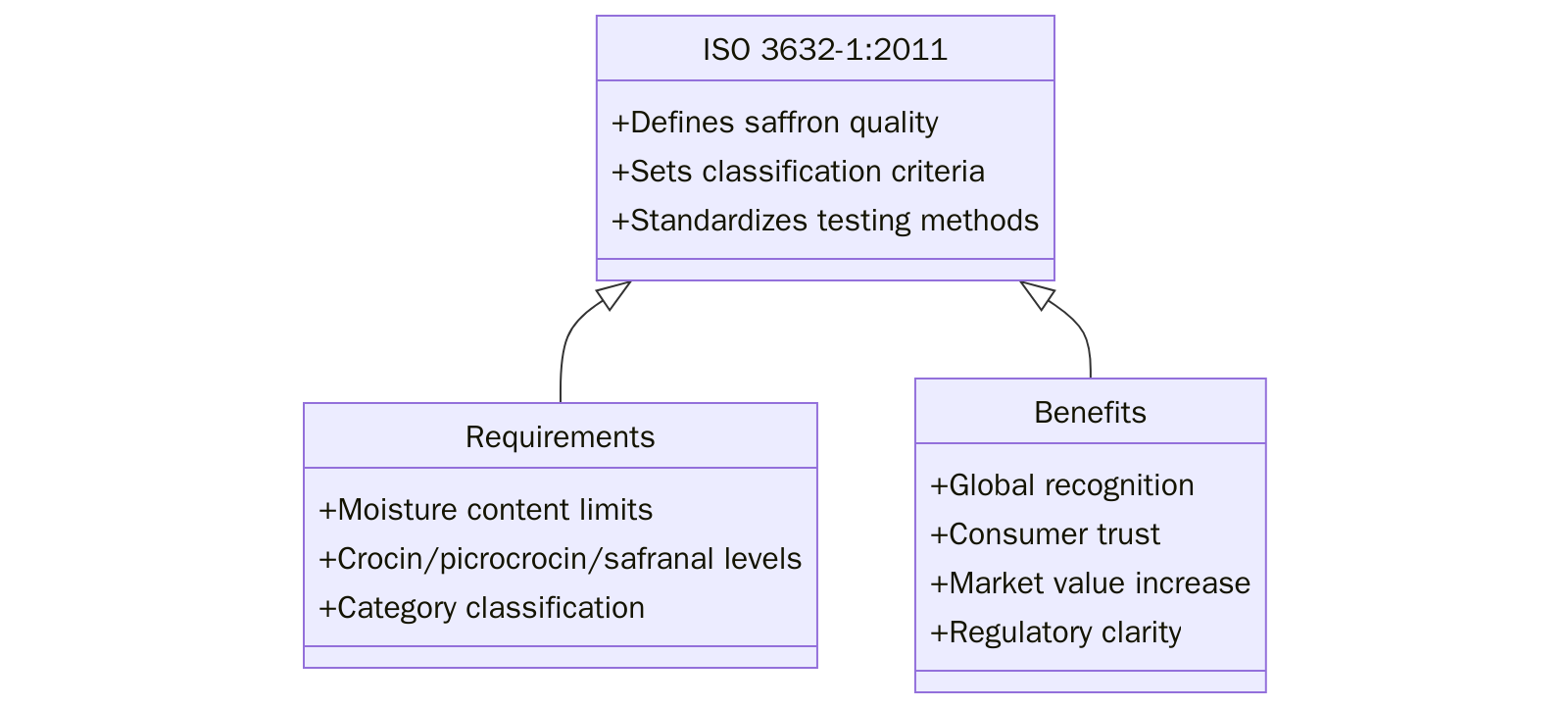
The standard classifies saffron into categories based on measurable quality indicators such as coloring strength (crocin content), flavor (picrocrocin content), and aroma (safranal content). These quality classes help producers, exporters, laboratories, and buyers assess product authenticity and value.
If you are looking for ISO 3632 certification for saffron, contact us at support@demo.pacificcert.com
ISO 3632-2:2010 complements ISO 3632-1 by defining the standardized test methods used to assess the quality of saffron. It outlines spectrophotometric procedures to determine the concentrations of key chemical markers, crocin (color), picrocrocin (taste), and safranal (aroma), as well as other parameters such as moisture content and extraneous matter.
These analytical techniques ensure consistent and objective classification of saffron into Category I, II, or III. ISO 3632-2 is essential for laboratories, exporters, and regulatory bodies conducting conformity assessments based on ISO 3632-1 specifications.
If you are looking to validate saffron quality using ISO 3632-2 methods, contact us at support@demo.pacificcert.com
The purpose of ISO 3632-1 is to:
If you are exporting or testing saffron against ISO 3632, contact us at support@demo.pacificcert.com
Scope
ISO 3632-1:2011 applies to saffron in filament (whole stigmas), cut filament, and powdered forms. It covers requirements relating to identity, purity, safety, and quality characteristics, but does not include methods of sampling or testing, which are specified separately.
Applicability
This standard is applicable to:
If you are involved in saffron trade or quality assurance, contact us at support@demo.pacificcert.com
If you need help with understanding saffron testing definitions, contact us at support@demo.pacificcert.com
Clause | Title | Overview |
1 | Scope | Defines the product types and application of the standard. |
2 | Normative References | Lists documents necessary for the application of the standard. |
3 | Terms and Definitions | Provides terminology related to saffron grading and purity. |
4 | Description | Specifies physical characteristics of saffron (filaments, powder). |
5 | Requirements | Outlines mandatory quality parameters and tolerances. |
6 | Classification | Defines three quality categories (I, II, III) based on chemical properties. |
7 | Packaging and Marking | Specifies rules for labeling, identification, and packaging standards. |
If you require clause-by-clause guidance on ISO 3632-1, contact us at support@demo.pacificcert.com
Parameter | Category I (Highest) | Category II | Category III |
Crocin (Coloring) | >200 | >170 | >120 |
Picrocrocin (Taste) | >70 | >55 | >40 |
Safranal (Aroma) | 20–50 | 20–50 | 20–50 |
Moisture Content (%) | ≤12 | ≤12 | ≤12 |
Extraneous Matter (%) | ≤0.5 | ≤0.5 | ≤0.5 |
If you need help testing saffron for ISO 3632 classification, contact us at support@demo.pacificcert.com
To comply with ISO 3632-1:2011, saffron producers and processors must:
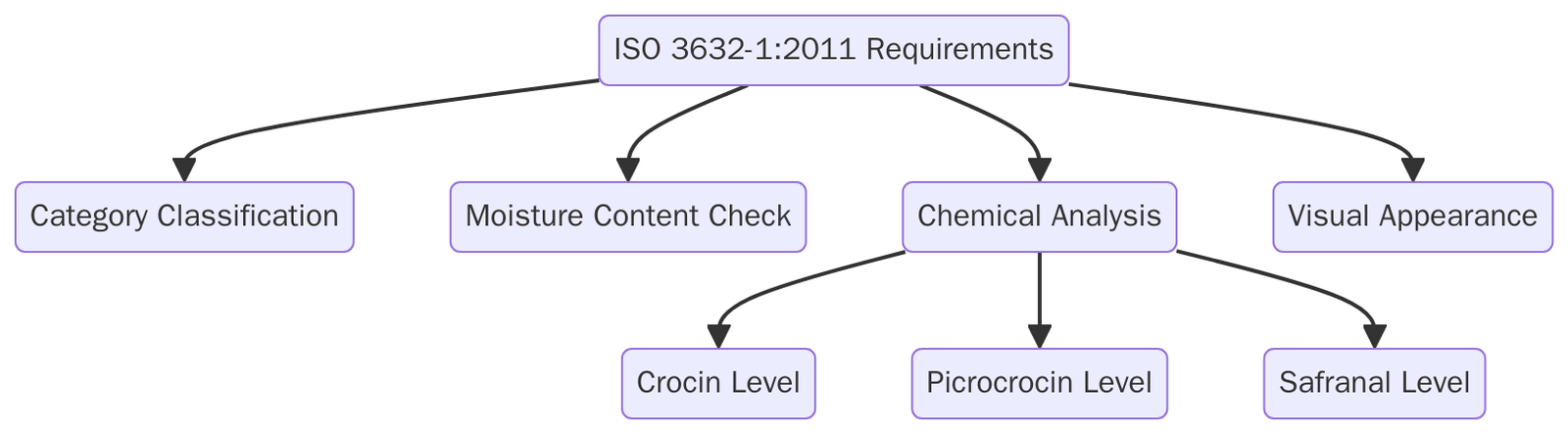
If you are preparing for ISO 3632 certification or export, contact us at support@demo.pacificcert.com.
If you need help compiling ISO 3632 documentation, contact us at support@demo.pacificcert.com
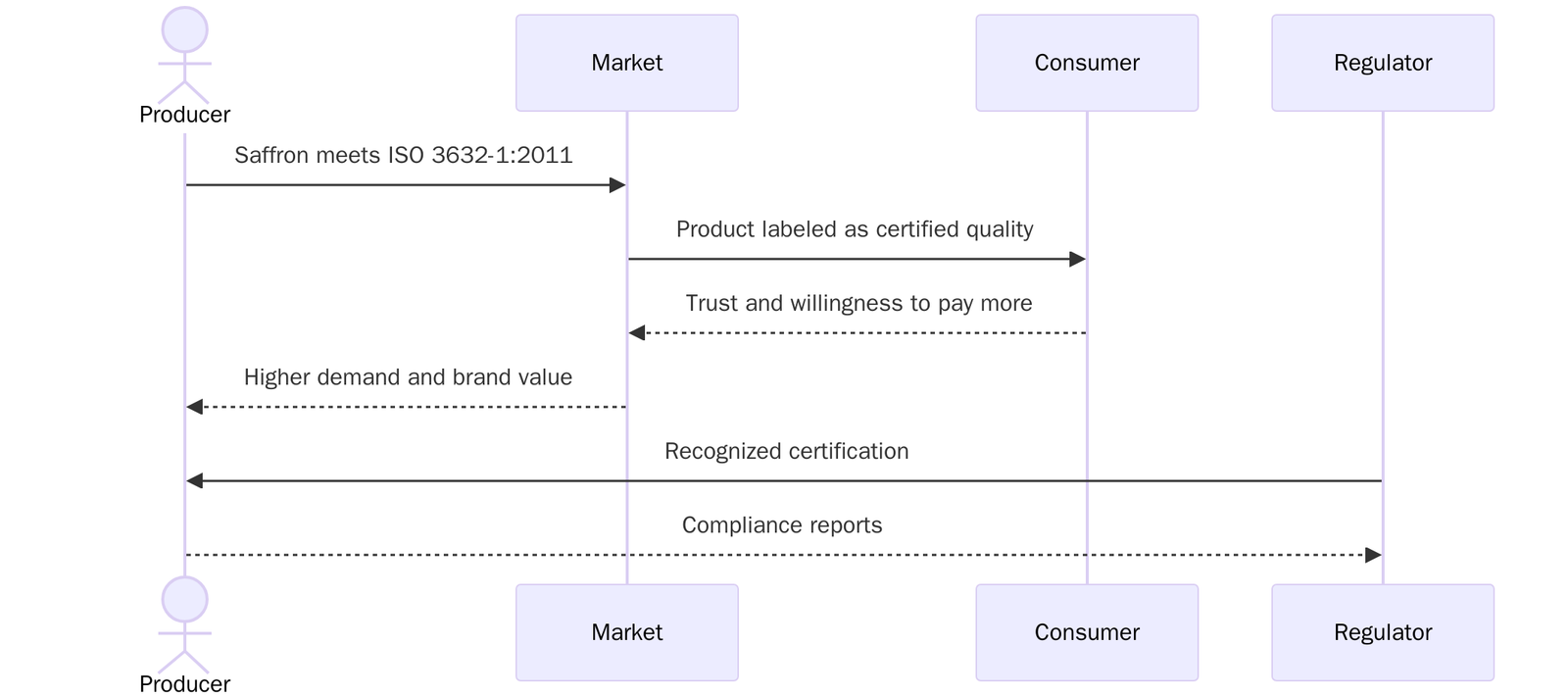
Countries like Iran, Spain, India, and Afghanistan remain major producers, but global buyers, especially in Europe, the UAE, Japan, and North America are increasingly demanding ISO-certified saffron to ensure product authenticity and traceability.
There is also a surge in the application of DNA fingerprinting and AI-based quality assessment, but ISO 3632 remains the international reference standard for evaluating the organoleptic properties of saffron.
If you are looking to enter premium global saffron markets, contact us at support@demo.pacificcert.com
The ISO 3632 certification process typically spans 3 to 5 weeks, depending on the form of saffron (filament or powder), testing complexity, and documentation readiness.
Week | Stage | Description |
Week 1 | Application & Sample Submission | Submission of saffron sample(s) and technical documentation. Scope is reviewed. |
Week 2 | Laboratory Testing (ISO 3632-2) | Accredited lab conducts tests for crocin, picrocrocin, safranal, moisture, and ash content. |
Week 3 | Test Report Analysis | Results are reviewed to classify saffron as Category I, II, or III. Compliance is verified. |
Week 4–5 | Documentation Review & Certification | Labeling, packaging, and traceability documents are assessed. Final certificate is issued. |
If you are preparing saffron for ISO 3632 testing and certification, contact us at support@demo.pacificcert.com
The cost for ISO 3632 certification is determined by several variables:
For a customized cost estimate for your saffron certification, contact us at support@demo.pacificcert.com!
Pacific Certifications offers end-to-end audit and certification services for ISO 3632:2011 and other food quality standards.
We provide:
If you are looking for ISO 3632 certification for saffron, contact us at support@demo.pacificcert.com
Contact Pacific Certifications to begin your certification journey today!
Suggested Certifications –
Read more: Pacific Blogs

Get a rough Estimate for your Required Certification by entering your basic details.
This will close in 0 seconds
Get in touch!
This will close in 0 seconds