
ISO 37120 sets out a series of standardized indicators that allow cities to measure how well their services perform and how those services impact the quality of life. The standard evaluates a broad range of sectors including public health, education, energy, transportation, and the environment. It enables cities to assess strengths and gaps using consistent benchmarks that apply worldwide, helping decision-makers base planning on real data rather than assumptions.
This standard is part of the ISO 37100 family, focused on sustainable development for communities. It gives cities a practical way to monitor progress and compare results with other municipalities. Beyond tracking, ISO 37120 encourages meaningful action by connecting metrics to real-world outcomes. Cities that adopt this standard use it to guide policies, support funding decisions, and report results in a transparent and structured way.
To get ISO 37120 certified for your urban development initiative, contact our team at support@demo.pacificcert.com.
ISO 37120 was developed to help cities evaluate how well they provide public services and how those services affect quality of life. As urban populations grow and city infrastructures are stretched, local governments need reliable data to make decisions. This standard serves that purpose by offering clear indicators and benchmarks. It encourages city administrations to use measurable evidence in setting priorities, improving services, and tracking outcomes over time.
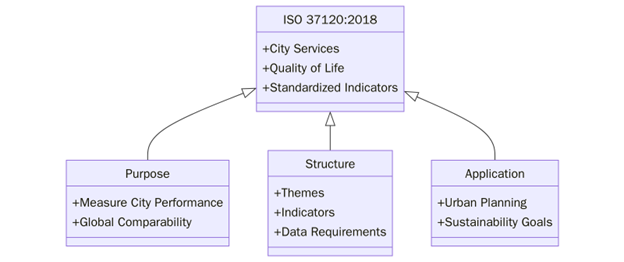
The purpose is not just about measuring performance but making sure services evolve based on data, long-term needs, and public expectations. Urban planners, policymakers, and leadership teams can use the framework to better manage growth, social equity, and resilience without relying on guesswork or outdated reporting systems.
ISO 37120 applies to a wide range of urban and community settings, whether they are small municipalities or major metropolitan areas. It does not limit its use to a particular geographic region or economic scale. The indicators in the standard are designed to allow for flexibility, so that local governments can apply them based on the specific context of their cities while still maintaining a comparable global structure. Organizations such as planning commissions, public utilities, transport agencies, and health departments can all use the standard to assess their contributions to overall city performance. Because the metrics cover multiple sectors—from energy to education—it’s particularly valuable in helping diverse departments work from a unified reporting model. This makes it easier for cities to align local policies with broader national and international goals, including those related to sustainability and urban resilience
Clause | Title | Description |
1 | Scope | Defines the boundaries and intent of the standard |
2 | Normative References | References to other related standards |
3 | Terms and Definitions | Lists and explains key terminology |
4 | City Context | Addresses local contextualization for indicators |
5 | Indicators | Categorized into 19 themes including economy, energy, environment, and more |
6 | Data Quality | Ensures consistency, reliability, and accuracy of reported data |
|
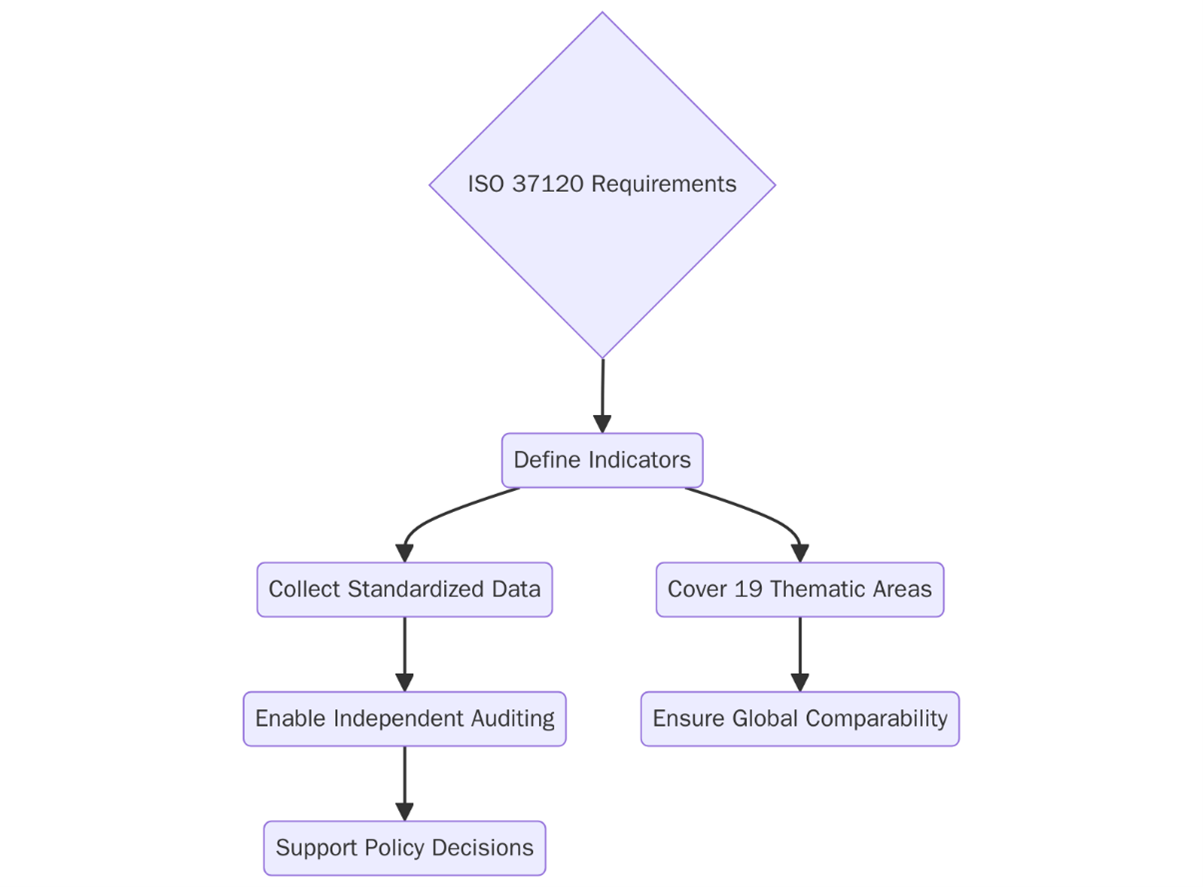
Meeting ISO 37120 requirements involve structured preparation across city departments. From governance to reporting, each step must be managed with attention to accuracy and reliability. Cities must ensure their processes can produce verified data and demonstrate a clear understanding of the indicators they report on.
Recently urbanization continues to accelerate, with over 56% of the global population living in cities. As governments and international organizations prioritize climate resilience, sustainable infrastructure, and public accountability, ISO 37120 has seen a rise in adoption. Cities in the EU, Asia-Pacific, and North America have shown growing interest in the standard to align with ESG frameworks and smart city initiatives. The World Council on City Data (WCCD) has been instrumental in promoting this standard globally.
ISO 37120 provides cities and communities with measurable value by offering a common framework to assess and improve services. It supports better governance by helping leaders track progress and respond to urban challenges using reliable data. These benefits make it a valuable standard for any city aiming for long-term growth and livability.
To begin your audit process for ISO 37120:2018 certification, reach out to support@demo.pacificcert.com.
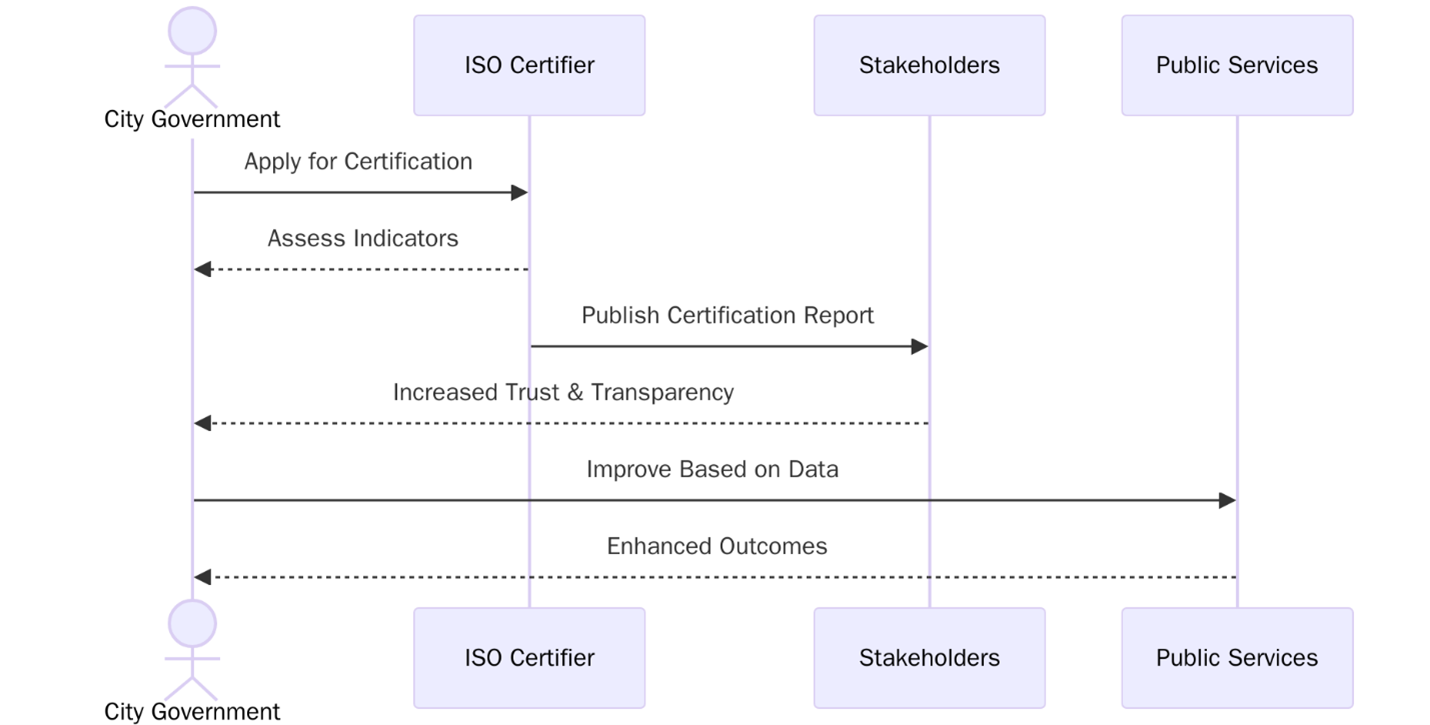
Preparing for implementation involves multiple steps. It’s important to understand what’s expected from the city government and involved departments to ensure readiness for audits.
All cities and communities, regardless of size or location, can apply for ISO 37120 certification. However, they must be capable of gathering data for a minimum number of core indicators to qualify for certification.
The certification process takes between 4 to 6 months. Stage 1 audit usually occurs within the first month after application, followed by the Stage 2 audit around month three. The remaining time is used for final documentation, report review, and certification issuance.
Before seeking ISO 37120 certification, city officials and departments should be aware of the meaningful benefits it offers. These are not just metrics; they guide urban development in a measurable and transparent way.
The cost of certification varies based on the size of the city, number of departments involved, and complexity of data collection systems. Smaller municipalities may incur lower costs, while megacities might require extensive resources for alignment and audit readiness.
Pacific Certifications conducts accredited audits for ISO 37120 and guides cities through the certification process by reviewing their data reporting systems and assessing compliance with indicator requirements. We do not provide consulting but ensure an impartial and independent certification process
For more information or to schedule an audit, contact us at support@demo.pacificcert.com.
Various training courses are available to help organizations comply with ISO 37120, including:
Contact Pacific Certifications to begin your certification journey today!
Suggested Certifications –
Read more: Pacific Blogs

Get a rough Estimate for your Required Certification by entering your basic details.
This will close in 0 seconds
Get in touch!
This will close in 0 seconds