ISO 9712:2021 Non-Destructive Testing pertains to the qualification and certification of personnel involved in non-destructive testing (NDT). Non-destructive testing is a suite of techniques used to evaluate the integrity of materials, components, or systems without causing damage to them. The standard outlines the criteria for the qualification and certification of these NDT professionals to ensure they meet internationally recognized levels of competence.
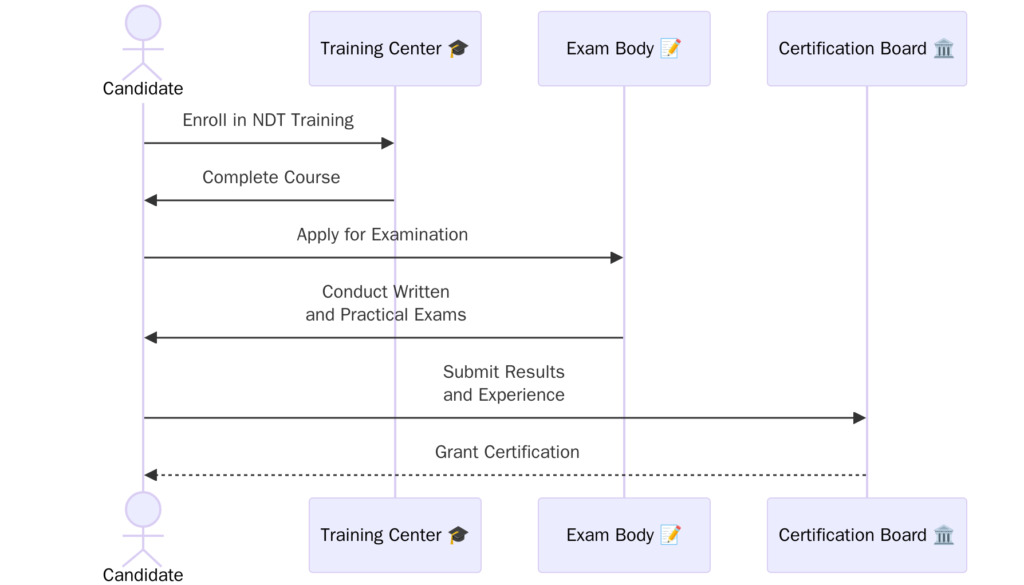
Key Aspects of ISO 9712:2021:
In summary, ISO 9712:2021 is an internationally popular standard and it ensures that NDT personnel possess the requisite qualifications and competencies to carry out their duties effectively. It provides a structured pathway for their training, examination, certification, and recertification, ensuring a high level of quality and safety in the application of NDT techniques.
The requirements set forth in ISO 9712:2021 for the qualification and certification of Non-Destructive Testing (NDT) personnel are comprehensive and designed to ensure that individuals meet a rigorous standard of competence. The standard stipulates requirements in several key areas:
General Requirements
Pre-Qualification Criteria
Training Requirements
Examination Requirements
Certification
Surveillance and Recertification
Record-Keeping
Documentation related to training, examination, experience, and other relevant records should be maintained by both the certified individual and the certification body for verification purposes.
Code of Ethics
Ethical guidelines and penalties for misconduct are often part of the certification scheme, although these might be specified by the certification body rather than in the ISO standard itself.
In summary, the ISO 9712:2021 standard provides a comprehensive framework for the qualification and certification of NDT personnel, encompassing pre-qualification criteria, training, examination, certification issuance, and ongoing surveillance. This ensures that certified personnel meet an internationally recognized level of competence, thus upholding the quality and safety standards in various industries where NDT is applicable.

The adoption of ISO 9712:2021 Non-destructive testing for the qualification and certification of Non-Destructive Testing (NDT) personnel offers numerous benefits for individuals, organizations, and industries at large. These benefits collectively contribute to higher standards of quality, safety, and efficiency. Below are some of the key advantages
Individuals
For Organizations
For Industries and Regulators
Cross-Functional Benefits
In summary, ISO 9712:2021 has wide-ranging benefits for various stakeholders, from individual professionals to organizations and the industry as a whole. Its adoption facilitates a culture of excellence, competence, and safety, underpinned by internationally recognized best practices in the field of Non-Destructive Testing.

ISO 9712:2021 Non-destructive testing personnel is relevant to a variety of stakeholders, each with distinct needs and motivations for compliance. Below are the primary entities who may find this standard essential:
NDT Professionals
Organizations
Regulatory Bodies and Accreditation Agencies
Educational Institutions
Consumers and End-users
In summary, ISO 9712:2021 is relevant to a broad spectrum of individuals and organizations from industries where Non-Destructive Testing is critical for quality assurance, safety, and regulatory compliance. Its universal applicability and recognition make it a valuable standard for enhancing professionalism and competence in the field of NDT.
At last, Pacific Certifications is accredited by ABIS, you need more support with ISO 9712:2021 Non-destructive testing, please contact us at +91-8595603096 or support@demo.pacificcert.com
It defines the qualification, examination, and certification process for NDT personnel, including scope, responsibilities, certification bodies, and re-certification requirements.
NDT professionals in industries like aerospace, construction, manufacturing, oil & gas, and automotive typically require this certification.
The standard includes ultrasonic testing (UT), radiographic testing (RT), magnetic particle testing (MT), penetrant testing (PT), eddy current testing (ET), and more.
Certification is valid for 5 years, after which personnel must renew or re-certify based on examination or continued professional development.
Yes, it’s a widely accepted international standard across industries requiring quality and safety inspections using non-destructive testing.
Accredited certification bodies or NDT institutions approved under ISO/IEC 17024 are authorized to conduct exams and issue certificates.
Contact Pacific Certifications to begin your certification journey today!
Suggested Certifications –

Get a rough Estimate for your Required Certification by entering your basic details.
This will close in 0 seconds
Get in touch!
This will close in 0 seconds