
ISO 13006:2018 is an internationally recognized standard that outlines the classification, essential characteristics and proper marking of ceramic tiles. Ceramic tiles are widely used in building and construction applications for their durability and performance. This standard ensures consistency across different types of ceramic tiles, offering clear guidelines that manufacturers, suppliers, regulators, and construction professionals can rely upon.

By providing standardized definitions and criteria, ISO 13006 supports product transparency and comparability across global markets. It helps to ensure that ceramic tiles used in homes, commercial spaces and infrastructure projects meet specific quality benchmarks, contributing to safety, functionality, and design integrity.
To start your ISO 13006 certification journey, contact support@demo.pacificcert.com.
ISO 13006:2018 applies to ceramic tiles of all varieties, whether dry-pressed or unglazed. It is applicable to floor tiles, wall claddings, and façade systems, and covers a wide spectrum of use-cases, from interior decoration to exterior surfaces exposed to moisture and environmental wear.
This standard is relevant to tile manufacturers, importers, product testers, builders, architects, and regulators. It includes detailed technical requirements for product classification, dimensional tolerances, surface quality, physical and chemical properties, and proper marking practices. ISO 13006 supports the entire supply chain in maintaining consistent quality and ensuring compatibility with regional building codes.
Begin your ISO 13006 conformity assessment with support@demo.pacificcert.com.
Get expert help from Pacific Cert at support@demo.pacificcert.com.
Organizations involved in the manufacturing, processing, or distribution of ceramic tiles are eligible for ISO 13006 certification. Whether a producer focuses on high-volume commercial flooring tiles or handcrafted decorative tiles, implementing to ISO 13006 ensures their products meet international expectations.
Eligibility requires that the product be testable and classifiable under the defined categories. Additionally, applicants must have the infrastructure to conduct (or outsource) laboratory testing and maintain traceable production records for verification.
Get certification support by emailing support@demo.pacificcert.com.
Costs are determined based on the scale of production, number of tile variants, and testing needs. A basic product line with a single type of tile may incur certification costs starting from $3,000, while manufacturers with a broad portfolio. Multisite manufacturers or exporters may require additional audits, increasing the cost depending on scope and test complexity.
For a detailed cost estimate, contact support@demo.pacificcert.com.
Total duration typically ranges from 8 to 12 weeks, depending on product readiness and testing outcomes.
ISO 13006 defines the classification of ceramic tiles into specific groups based on water absorption:
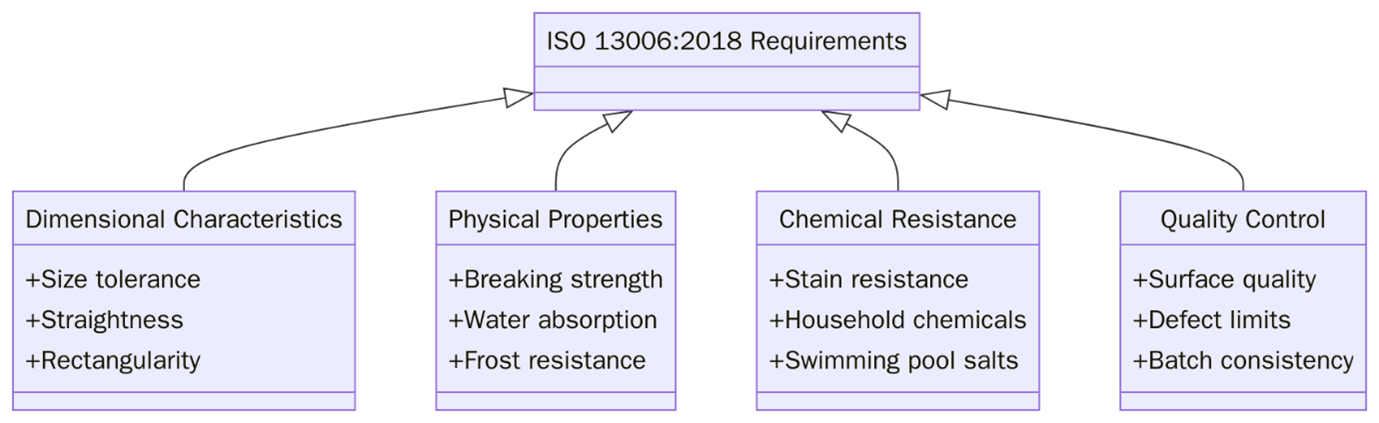
Additional performance requirements include:
Meet ISO 13006 certification criteria with Pacific Certifications – support@demo.pacificcert.com.
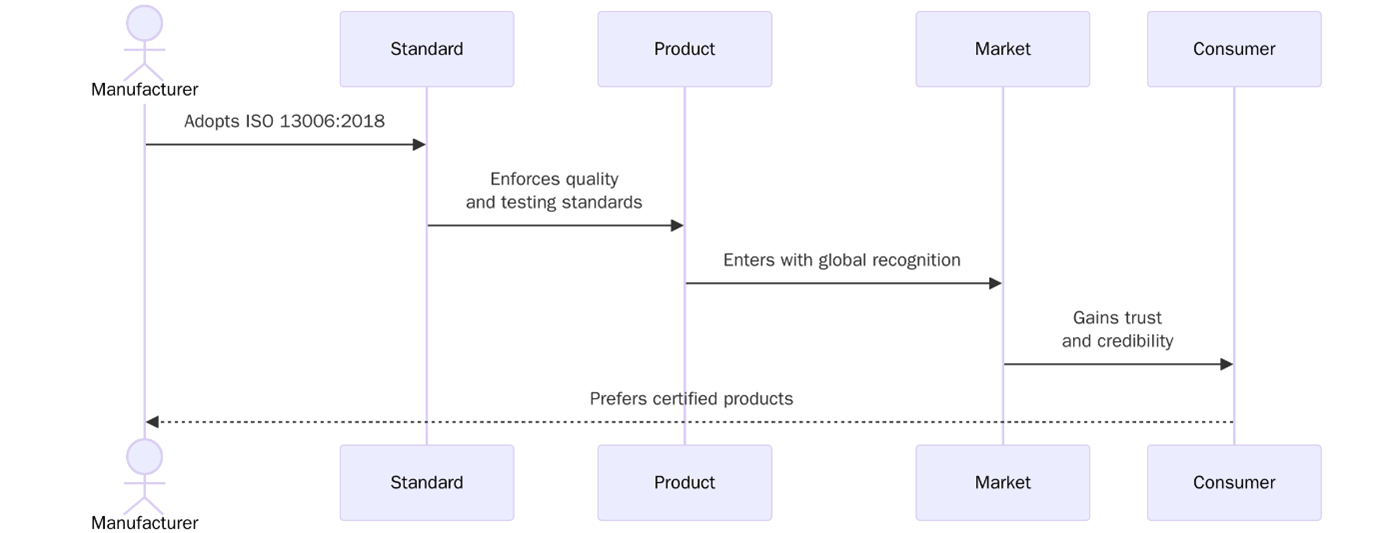
Ceramic tile usage is growing due to its alignment with both aesthetic and functional design needs in residential, commercial, and public architecture. ISO 13006 plays a pivotal role in promoting standardization across different regions, facilitating international trade by reducing testing redundancy and minimizing market entry barriers.
Tiles manufactured under ISO 13006 are preferred in public tenders, hotel and retail construction, and institutional projects due to their consistent specifications. As environmental labeling becomes more prominent, ISO 13006 also complements green certification efforts like LEED and BREEAM, especially where tiles meet durability and low-emission criteria.
Pacific Certifications offers comprehensive services to ceramic tile manufacturers and suppliers seeking ISO 13006 certification. We bring industry-specific knowledge, auditing expertise, and fast-track solutions to streamline the path to conformity.
Our services include:
Get certified today with Pacific Certifications, contact us at support@demo.pacificcert.com.

Get a rough Estimate for your Required Certification by entering your basic details.
This will close in 0 seconds
Get in touch!
This will close in 0 seconds